Condo Flooring Installation on Maui
Maui Prestige Flooring installs new floors in condos across Maui for owners, vacation rental operators, property managers and associations, from South Kihei Road walk-ups to Kaanapali towers. Over 16 years and more than 1,700 jobs, we have learned that in a condo the floor itself is only half the job.
The other half is the building. Approval forms, sound ratings, elevator reservations, work hours and the neighbor downstairs all shape what you can install and when.
We help you put together the approval package, install a sound-rated floor system and follow your house rules from the first delivery to the last swept hallway. Every project has a written quote and a 1-year labor warranty.
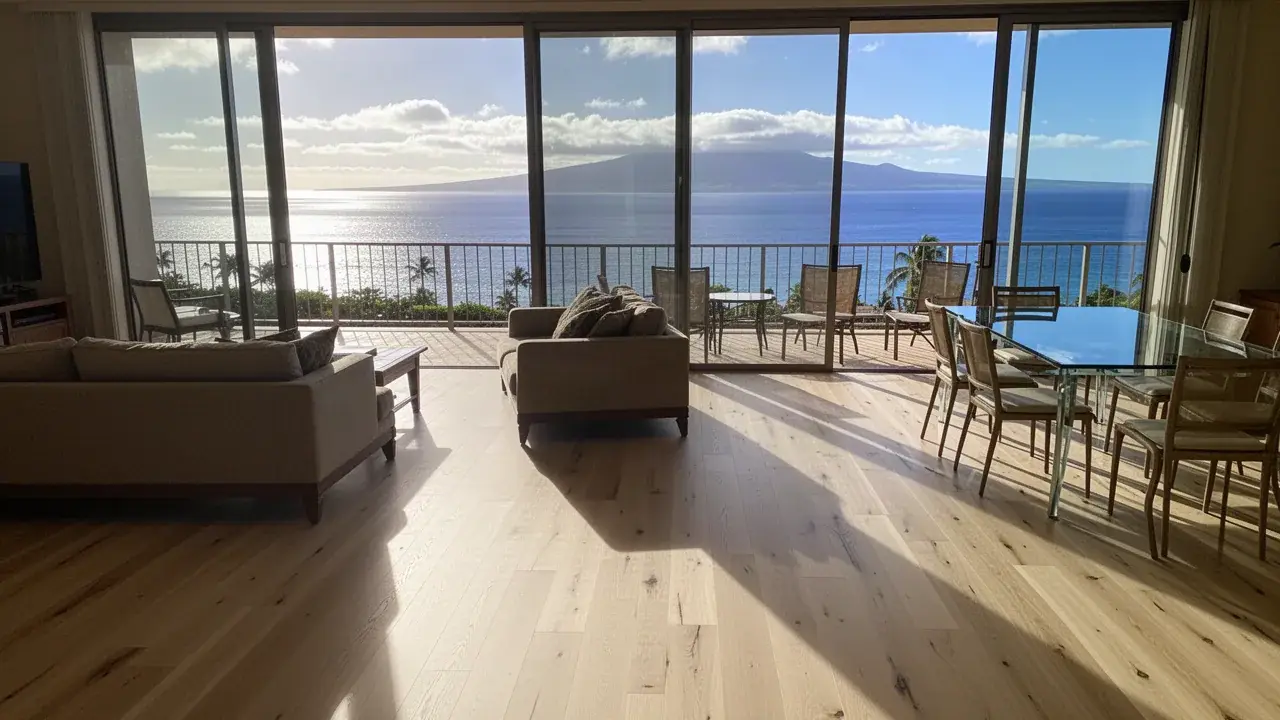
Condo Flooring Installation for Maui Owners and HOAs
Our condo flooring service covers the rules, the paperwork, the floor and the building logistics on one quote. In Hawaii, condo associations are usually called an AOAO (Association of Apartment Owners) and operate under Hawaii Revised Statutes Chapter 514B, with house rules that govern alterations such as new floors.
We work with:
- Owners replacing tired tile or carpet in a full-time home or second home
- Vacation rental owners who need a floor that survives guest turnover and fits a short install window
- Property managers handling several units in the same complex
- Boards and resident managers planning corridor, lobby or clubhouse floors
Every condo flooring project includes a review of your building’s rules, help assembling the approval package, removal of the old floor, a sound-rated floor system, installation and cleanup of the unit and any common areas we used. If the old floor is vinyl tile or black mastic from before about 1980, our floor removal and disposal service tests it for asbestos before anyone breaks it up.
Getting HOA Approval for New Floors
Most Maui associations require written approval before you replace a floor, and the request goes through the managing agent or resident manager to the board. Some buildings approve within days, while others only review requests at a monthly board meeting, so we start the paperwork at the measure.
Read Your Building's Flooring Rules
Ask the managing agent for the house rules and any alteration or renovation policy. Common requirements include a minimum IIC rating, approved underlayment types, limits on hard floors in bedrooms, a refundable damage deposit and set work hours.
Submit Product and Sound Rating Data
Boards want the flooring data sheet, the underlayment data sheet and a lab test report for the assembly, plus a floor plan marking which rooms change. We assemble these documents for the products you choose.
Provide Insurance Certificates and Schedules
Expect to supply a certificate of insurance, often naming the association as additional insured, proof of workers’ compensation and a contractor license, and a schedule with start and finish dates.
Once the approval letter arrives, we keep a copy on site during the work. Resident managers sometimes ask to see it, and some buildings want it posted on the unit door with the work dates.
Associations can confirm any contractor’s license on the DCCA public license search. We send our insurance certificates directly to the managing agent when the building asks.
Sound Ratings Your Board Will Ask For
Your board will almost always ask for an IIC rating, which measures footstep and impact noise, and sometimes an STC rating for airborne sound. Many Maui associations set IIC 50 or higher for hard floors, and some buildings set a stricter number of their own.
The number has to come from a test report for the whole assembly, meaning the floor, the underlayment and a slab like yours. A rating printed on a flooring box alone is rarely enough for an approval.
Some rules also call for a field test after installation, which usually scores a few points below the lab result. Our acoustic underlayment page explains the products, the test standards and how to pick a system with room to spare.
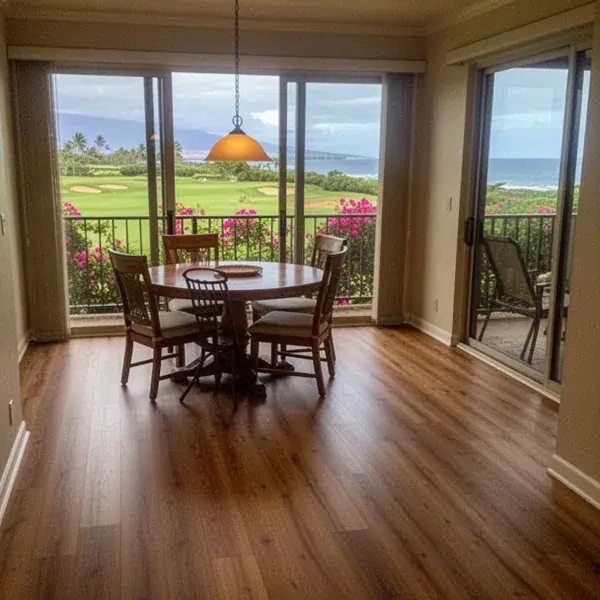
Best Floors for Maui Condos
For most Maui condos, luxury vinyl plank over a rated underlayment is the best balance of sound control, humidity resistance and rental durability. Engineered wood, porcelain tile and carpet each win in specific situations.
| Floor | Sound with a rated system | Humidity and salt air | Rental durability |
|---|---|---|---|
| Luxury vinyl plank with rated pad | Meets most IIC 50 to 55 rules | Waterproof core, very stable | Excellent with a 20 mil wear layer |
| Engineered hardwood | Good, best glued over rubber | Stable if the slab is dry | Moderate; scratches from sand |
| Porcelain tile on a sound membrane | Good with the right membrane | Unaffected by moisture | Excellent; grout needs sealing |
| Carpet with pad | Best impact rating of all | Fine with air movement | Fair; stains and sand wear |
Luxury vinyl plank installation is our most common condo floor for full-time homes and rentals alike. For a stone look in kitchens and lanai-facing living rooms, porcelain tile installation over a bonded sound membrane holds up to wet feet and sunscreen.
Rental owners should check one more detail. Many product warranties treat a vacation rental as commercial use, which our vacation rental flooring page covers in more depth.
Not sure what your building will approve?
Send us your house rules and we will shortlist floors that meet them before you fall for a sample.
Building Logistics: Elevators, Parking and Work Hours
A condo install runs on the building’s calendar, so we book elevators, parking and loading times before the first box arrives. Getting this right keeps neighbors, the resident manager and the board on your side.
- Elevators: we reserve the service elevator for delivery and debris days, hang protective pads and cover lobby and hallway floors.
- Parking and staging: material goes straight into the unit, where engineered wood also acclimates, and contractor parking follows the building’s pass system.
- Work hours: many buildings limit noisy work to weekday daytime hours and bar it on Sundays and holidays, so tile removal and grinding are scheduled first.
- Neighbor notices: we post notices with dates and noisy days, and give the unit below a heads-up before demolition.
- Debris: old flooring leaves with us each day instead of filling the building’s trash room.
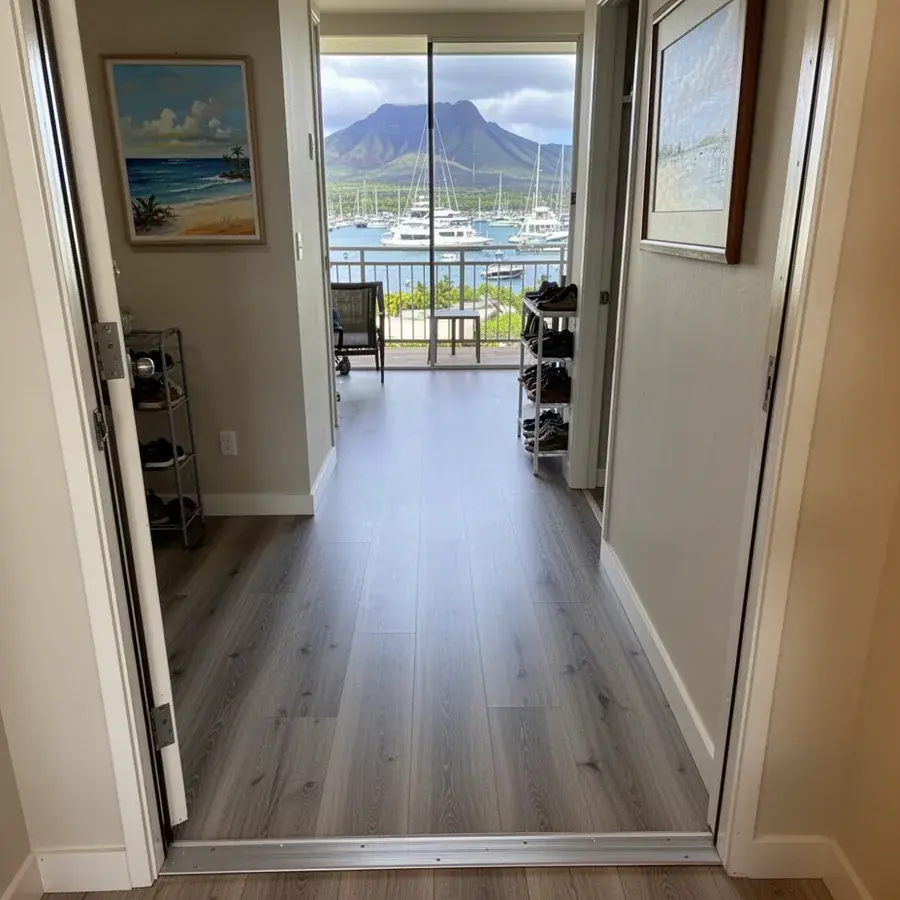
Most 1 and 2 bedroom condos take 3 to 5 working days from tile removal to finished floor, a little more when the slab needs leveling. For rental units, we build the schedule backward from your next guest arrival and confirm the dates in writing.
Before work starts, we photograph the hallway, elevator and entry finishes along our route. That record protects your damage deposit and settles any question about scuffs that were already there.
Condo Flooring Around the Island
We install condo floors in every part of Maui, and each area’s buildings bring their own conditions. Here is what we plan for in the main condo districts, and our carpet installation service is there for bedrooms where the rules or the downstairs neighbor favor something soft.
Kihei and Wailea
The South Kihei Road corridor is lined with complexes from the 1970s and 1980s, many run as vacation rentals. Sand, strong sun and tight turnover windows drive floor choice, while some of Wailea’s resort condos set stricter sound rules.
Kaanapali to Napili
Condos along Lower Honoapiilani Road in Honokowai, Kahana and Napili face salt air and constant rental use. The drive from Wailuku on Honoapiilani Highway means we schedule West Maui jobs in full-day blocks.
Kahului and Wailuku
Central Maui complexes are mostly full-time homes close to our Wailuku office, so measures and follow-up visits are quick. Red dirt dust makes walk-off mats and higher wear layers worth it.
Upcountry and North Shore townhome associations follow the same approval steps, though their wood-framed buildings call for different underlayments than concrete towers.
FAQ
Condo Flooring FAQ
Do I need HOA approval to replace my condo floors?
Almost always for hard floors, and often even for carpet. Most Maui associations require a written request before any flooring change, because the new floor affects the unit below.
Installing without approval can lead to fines or an order to remove the floor at your cost. We do not start work until you have the approval letter in hand.
Can I put hardwood in my condo?
Usually yes, as engineered hardwood over a sound-rated underlayment, glued down or floated depending on the system that was tested. Solid hardwood is rarely practical, because most condos are concrete and solid boards are nailed to a wood subfloor.
Our engineered hardwood installation page covers species and construction, and we check that the assembly meets your building's sound rule before you order.
What if my downstairs neighbor complains about noise?
Start with the paperwork: the approved product data, test report and installation photos show the floor was built as approved. If the dispute continues, the board may ask for a field impact test by an acoustical consultant.
Most complaints are solved with area rugs, felt pads on chair legs and furniture, and softer shoes indoors. If a floor truly falls short, our acoustic underlayment installation team can explain the options for upgrading the system.
Get a quote
Start Your Condo Flooring Approval
Send us your building name, your unit's rooms and a copy of the flooring rules if you have them. We will measure, recommend a floor system that fits the rules and send a written quote with the documents your board needs.
- Mon to Sat 7am to 9pm, Sun 9am to 9pm
- 1710 W Kaahumanu Ave, Wailuku, HI 96793
- Licensed, insured and backed by a 1-year labor warranty