Rubber Flooring Installation on Maui
Maui Prestige Flooring installs rubber flooring in Maui clinics, schools, commercial kitchens, garages, playrooms and ranch barns. In 16+ years and over 1,700 flooring jobs, we have put rubber down wherever people stand for hours, drop things or walk on wet floors.
Rubber is grippy when wet, quiet underfoot and forgiving on knees and backs. It is also one of the trickiest floors to glue, because dense rubber traps any moisture that rises from a Maui slab.
We test the slab, choose the right format and adhesive, and install with tight seams and a proper cure before traffic. Your quote is written, and our labor is backed by a 1-year warranty.
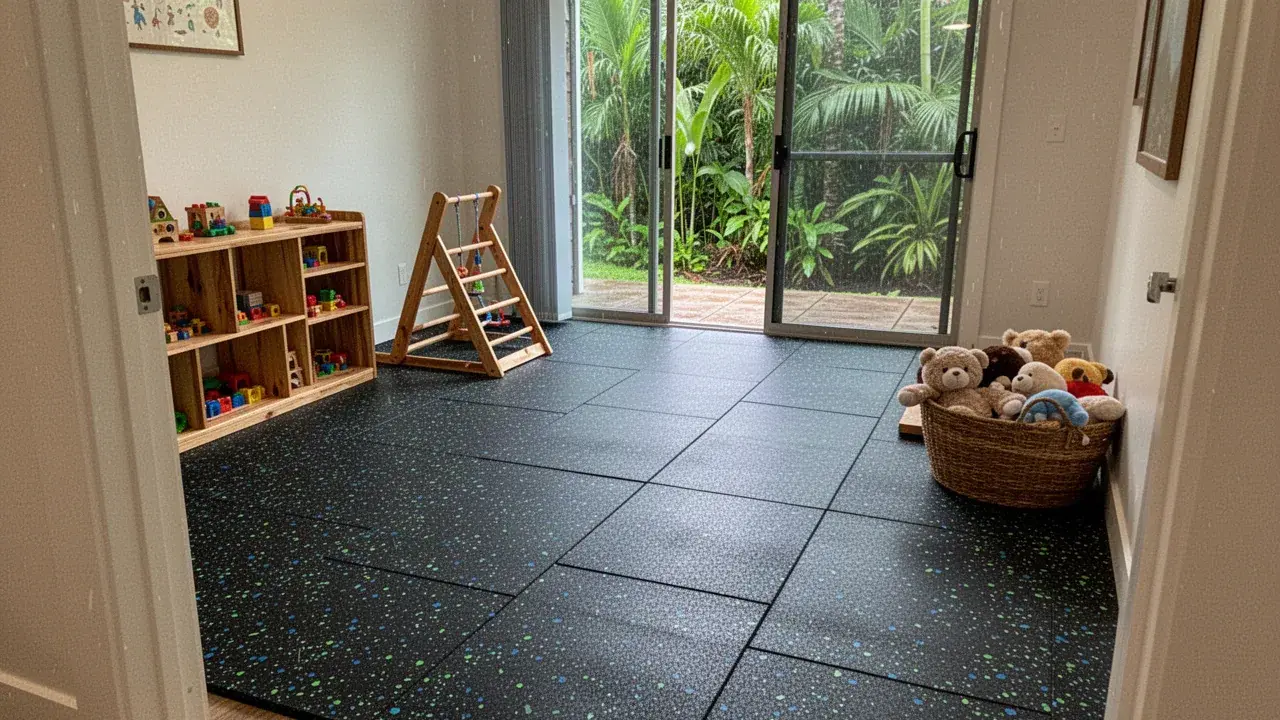
Commercial and Residential Rubber Flooring Installation
Rubber flooring is made either from recycled SBR (styrene-butadiene rubber, mostly ground tires) bound with polyurethane, or from virgin rubber vulcanized under heat and pressure. Recycled rubber is tough, inexpensive and usually flecked with colored EPDM granules. Vulcanized rubber is denser, smoother, lower in odor and easier to keep clean.
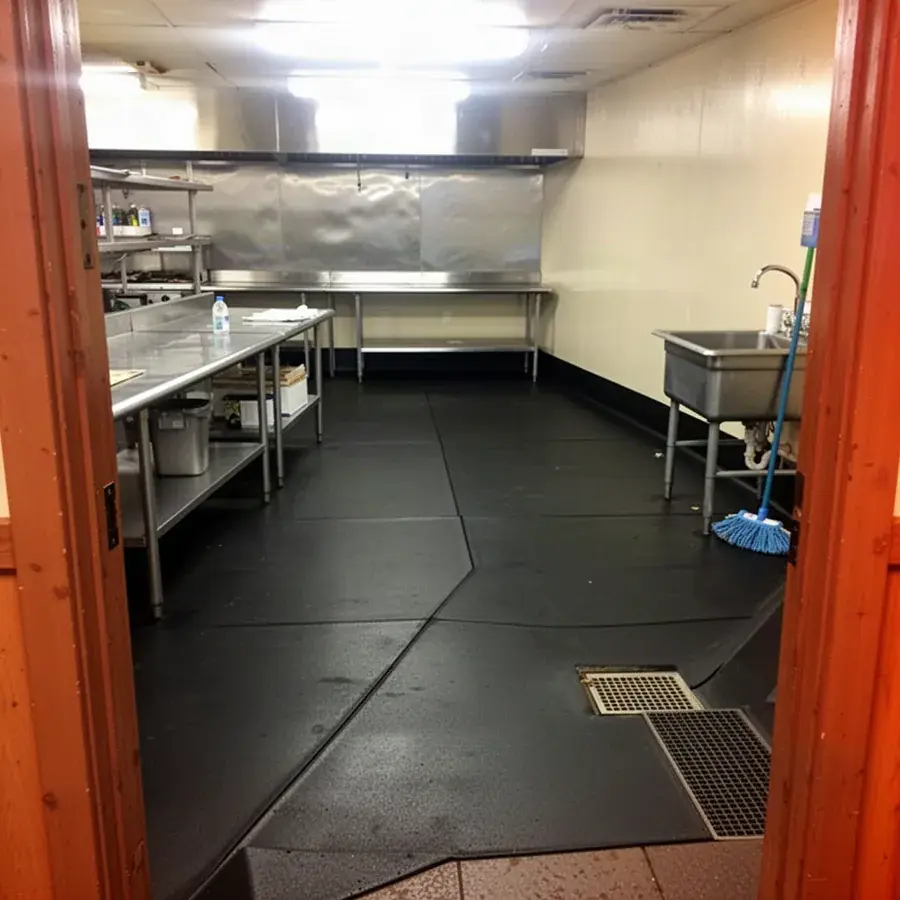
On Maui we install it in medical and dental offices, school hallways and science rooms, restaurant kitchens and behind bars, garages and workshops, playrooms and Upcountry barns. For fitness rooms, drop zones and courts, see our gym and sports flooring installation page.
Every rubber flooring job includes:
- Slab moisture testing before any adhesive is chosen
- Grinding, patching and cleaning the substrate
- Dry layout, seam planning and acclimation of the rubber
- Adhesive installation and rolling, or loose-lay where it suits
- Trim, transitions, cleanup and care instructions
Rubber Floor Formats
Rubber comes in four main formats, and the right one depends on seams, traffic and whether the floor ever needs to come up. Brands we install include Regupol, Ecore, Roppe and Johnsonite.
Sheet Rubber in Rolls
Rolls run about 4 feet wide and 2 to 10 mm thick, so a room has very few seams. That makes sheet rubber the hygienic pick for clinics, labs and kitchens, where each seam is a place for dirt to collect.
Rubber Tiles
Square tiles, often 24 x 24 inches, glue down in a grid or a pattern of mixed colors. A gouged or stained tile can be cut out and replaced without touching the rest of the floor.
Interlocking Rubber Mats
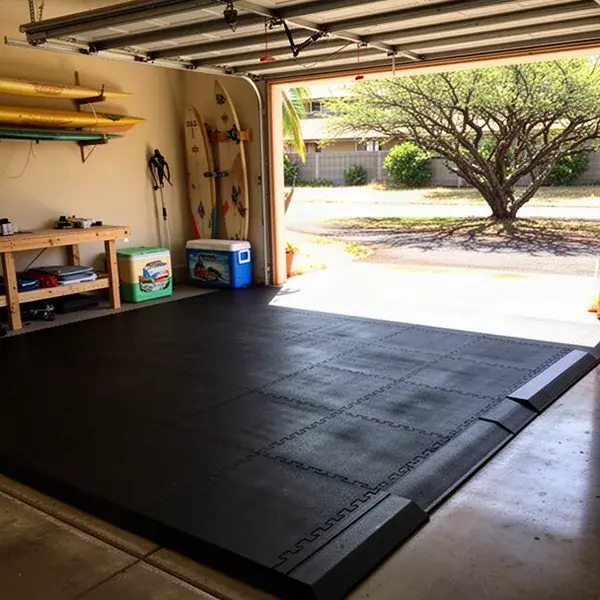
Puzzle-edge mats from 3/8 to 3/4 inch thick lock together with no adhesive. They suit garages, home workshops, playrooms and horse stalls, and they lift out when you need to clean or move.
Rubber Stair Treads and Nosings
One-piece treads with a raised pattern and a molded nosing grip shoes on commercial stairwells and school stairs. Contrasting nosing strips mark the edge of each step for visibility, and our stair and tread installation team matches treads to the landings.
Thickness follows the job. Commercial sheet and tile for clinics and corridors usually runs 2 to 4 mm so carts roll easily, while garages, playrooms and barns call for 3/8 inch and up, where cushioning matters more.
Commercial kitchens need one more check. Standard SBR swells and softens when cooking oil sits on it, so for cook lines and fryer stations we specify a grease-resistant nitrile rubber.
Playground and play-area tiles are a fifth option. They are thicker, and their impact attenuation is tested to ASTM F1292 for a rated fall height, so we match tile thickness to the height of the equipment.
Where Rubber Beats Vinyl and Tile
Rubber wins anywhere people stand all day, the floor gets wet, or noise and dropped items are a problem. Vinyl and tile win on upfront cost per square foot and on looks in living spaces.
| Factor | Rubber | Vinyl (LVT, VCT, sheet) | Porcelain tile |
|---|---|---|---|
| Slip resistance when wet | Very good, especially textured | Fair, varies by finish | Low to good, depends on surface |
| Sound and impact | Absorbs footfall and drops | Moderate | Loud, dropped items break |
| Comfort for standing staff | Best, eases joint fatigue | Moderate | Hard and tiring |
| Maintenance | Neutral mop, no wax | No-wax LVT; VCT needs polish | Grout lines need upkeep |
| Typical Maui installed cost | $6 to $14 per sq ft | $4 to $13 per sq ft | $16 to $30 per sq ft |
Your written quote is the exact figure, driven by format, thickness, slab prep and adhesive system. For corridors where cost per square foot matters most, our sheet vinyl and VCT installation page explains the lower-cost resilient options.
Need a floor your staff can stand on all shift?
We bring rubber samples in sheet and tile and match thickness to how the room is used.
Adhesives, Seams and Slab Moisture
Rubber is dense and nearly vapor-tight, so moisture rising through a slab gets trapped under it and attacks the adhesive. The result is bubbles, curled tile corners and seams that open within months.
That is why we test before choosing the glue, using the methods described on our moisture vapor barrier installation page. Rubber makers set strict limits for each adhesive, and a failed reading means mitigation first.
- Urethane adhesive: one-part or two-part, the workhorse for sheet and tile in most rooms
- Two-part epoxy: for kitchens, wet areas and rolling loads, where seams must stay locked
- Pressure-sensitive adhesive: for some tiles that may need to come up later
Seams are butted tight or double-cut, rolled with a 75 to 100 lb roller and weighted while the adhesive grabs. Rolls are unrolled and left flat for a day or two first, because rubber shrinks and relaxes after being wound tight for shipping.
Rubber Floors in Hot, Humid Spaces
Maui heat speeds up the smell of new rubber, and sun through open doors fades and dries it. Plan for both before you order.
Odor and ventilation
Recycled SBR off-gasses most in a closed, hot room. Trade winds through open windows and a fan or two clear it fastest, and vulcanized rubber is the low-odor choice for small rooms.
UV near open doors
Strong sun at a garage door or lanai slider fades colored EPDM flecks and can dry the surface. Black rubber in direct sun also gets hot enough to notice barefoot.
Damp garages and barns
In wet windward spots like Haiku, loose mats can trap moisture underneath. Lift and dry them now and then, and in Kula and Makawao barns, choose 3/4 inch stall mats that drain and hose off.
For a garage that sees cars, oil and hot tires, a coating may be a better fit than rubber. Our epoxy flooring and concrete coatings page compares the two for Maui garages, including the many in Upcountry Maui homes.
Our Rubber Flooring Install Process
Site check and slab test
One visit
We measure, note traffic and wet zones, and take moisture readings. The results decide the format, thickness and adhesive.
Acclimation
24 to 48 hours
Rolls and tiles sit flat in the room so they relax and match room temperature before cutting.
Substrate prep
Half a day to 2 days
Old flooring and adhesive come off, and the slab is ground, patched and vacuumed. Big dips are handled by our subfloor repair and floor leveling service.
Layout and dry fit
A few hours
Seams are planned away from doorways and drains, and sheets are cut long, then trimmed in place.
Glue and roll
1 to 2 days for most rooms
Adhesive is troweled at the specified notch, the rubber is laid and rolled in both directions, and seams are weighted.
Cure and cleanup
24 to 72 hours
Light foot traffic usually resumes after about a day. Carts, equipment and furniture wait for the adhesive’s full cure.
A 300 to 500 sq ft garage, kitchen or clinic hallway typically takes 1 to 2 days of install plus the cure. School stairwells and larger commercial jobs are phased, as we describe on our school flooring page.
FAQ
Rubber Flooring FAQ
Does rubber flooring smell?
Recycled rubber has a noticeable tire-like smell at first, strongest in a closed, hot room. With fans and open windows it usually fades a lot within a few weeks and keeps dropping over the next couple of months.
If odor is a concern in a bedroom, clinic or small studio, we recommend virgin or vulcanized rubber, which has very little smell.
Can rubber flooring be glued directly to concrete?
Yes, and that is how most commercial rubber is installed. The slab must pass a moisture test, be clean and free of old adhesive or sealers, and be patched smooth so nothing telegraphs through. We then use the adhesive the rubber maker specifies, often a urethane or two-part epoxy on Maui slabs.
How do you clean and maintain rubber floors?
Dust mop or vacuum grit daily, then damp mop with a pH-neutral cleaner and rinse. Avoid solvents, oil-based soaps, bleach and citrus degreasers, which can dry out rubber or leave a slippery film. Commercial rubber can also be machine scrubbed with a soft red pad, and some products accept a maker-approved dressing.
Get a quote
Get a Rubber Flooring Quote
Tell us the room, its size and how it is used, from a clinic hallway to a home garage. We will test the slab and send a written quote for the right rubber flooring system.
- Mon to Sat 7am to 9pm, Sun 9am to 9pm
- 1710 W Kaahumanu Ave, Wailuku, HI 96793
- Licensed, insured and backed by a 1-year labor warranty