Gym and Sports Flooring Installation on Maui
Maui Prestige Flooring designs and installs gym and sports floors for fitness clubs, CrossFit boxes, school gyms, hotel fitness centers, dance studios and home gyms across Maui. With 16+ years in flooring and more than 1,700 completed jobs, we build floors that protect the slab, the equipment and the people training on them.
A good gym floor is really several floors in one room. The squat rack, the cardio row, the stretching corner and the sled lane each need a different surface and thickness.
We start with how you train, then lay out zones, test the slab and install each system with clean seams and markings. You get a written quote, a phased schedule and a 1-year labor warranty.
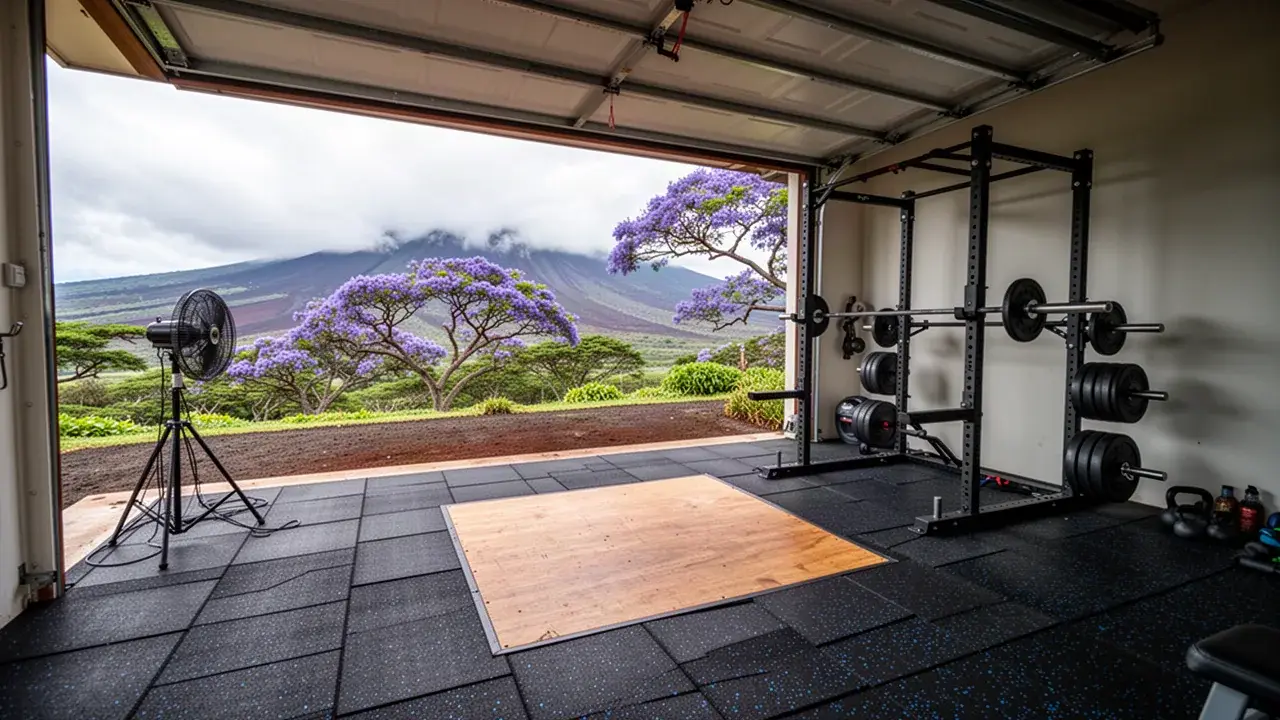
Sports and Gym Flooring Installation for Clubs, Schools and Home Gyms
We install fitness and sports flooring for commercial gyms and CrossFit boxes, school gyms and multipurpose rooms, hotel and condo fitness centers, physical therapy clinics, dance and yoga studios, and home gyms built in garages and spare rooms. Each floor is planned around the activity, not around a single product.
Every gym flooring project includes:
- An activity assessment and a zone-by-zone layout drawing
- Slab moisture testing and flatness checks
- Installation of each surface, from rubber to sprung floors and turf
- Painted or inlaid lines, zone striping and transitions between systems
- Equipment reset coordination and cleanup
If you want to know how rubber itself is made, glued and maintained, our rubber flooring installation page covers the material in depth. This page focuses on the facility.
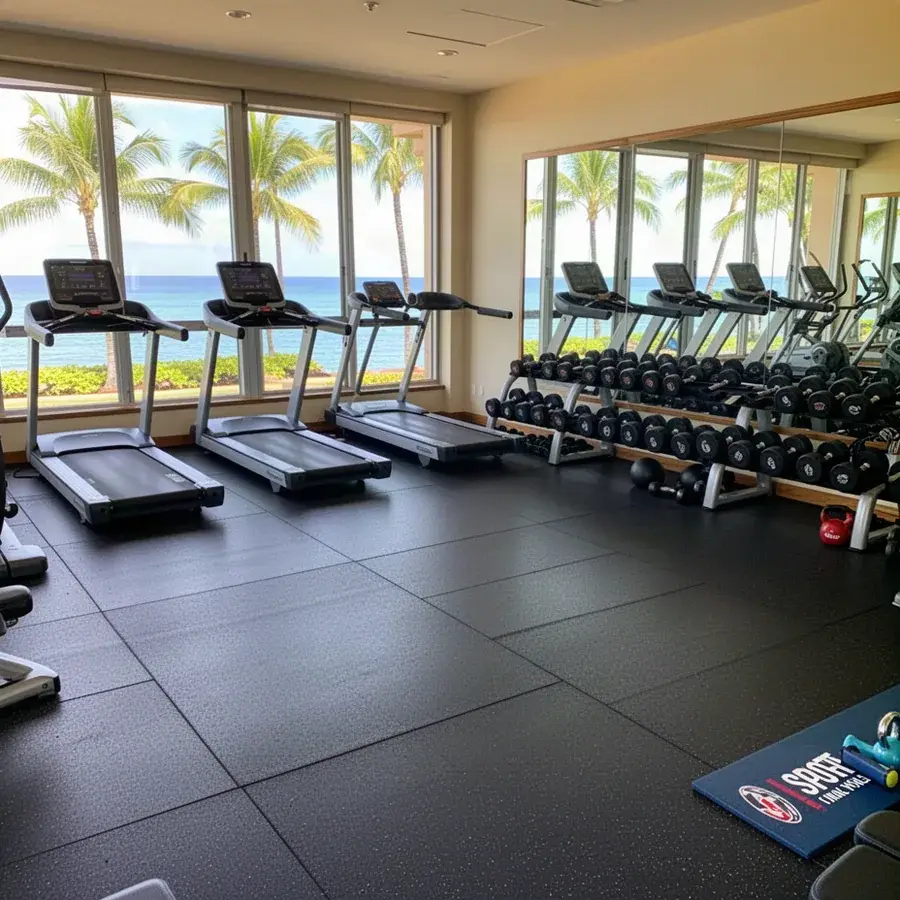
Floor Systems by Activity
Match the floor to what happens on it. A surface that protects a slab from a dropped deadlift is too hard and grippy for a dance class, and a sprung studio floor would be wrecked by a loaded barbell.
| Activity | Recommended surface | Typical thickness |
|---|---|---|
| Free weights and racks | Dense rubber tile or rolls | 3/8 to 3/4 inch |
| Olympic lifting and drop zones | 1 inch rubber tiles or a lifting platform | 1 inch to 2+ inches |
| Cardio machines | Rubber rolls | 1/4 to 3/8 inch |
| Group fitness and HIIT | Rubber or sport vinyl over a foam layer | About 6 to 10 mm |
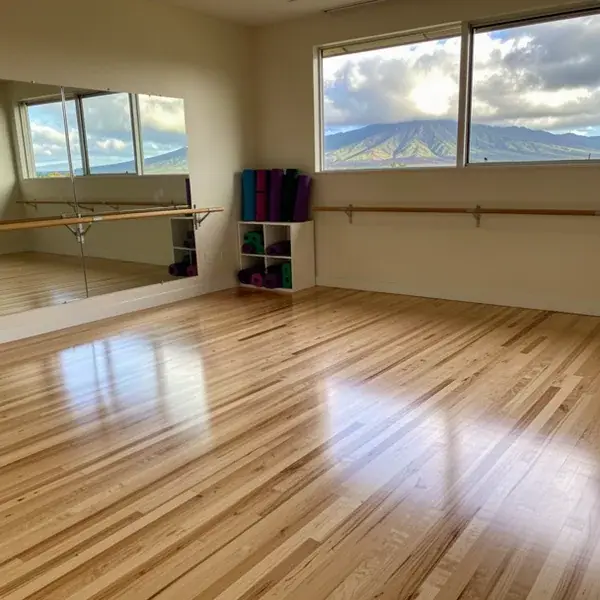
| Yoga, dance and barre | Sprung floor with a vinyl or wood top, or cushioned vinyl | Sprung build-up varies by system |
| Courts and multi-sport | Sport vinyl, maple or modular court tiles | Varies by system |
| Sled and agility lanes | Infill-free turf over a pad | Short pile, about 1/2 inch |
Most gyms use three or four of these zones in one room. We draw the layout so transitions fall where traffic is light and nobody trips at a height change.
Physical therapy clinics and senior fitness rooms are the exception to “thicker is better.” Walkers, wheelchairs and balance work need a firm, smooth surface, so we usually specify thin rubber or sport vinyl there.
Rubber Thickness for Lifting and Drop Zones
Dropped weights crack slabs, shatter tile and send a thud through the building. The heavier the drop, the thicker and more layered the floor must be.
3/8 inch rubber
Handles dumbbells set down with control, machines and general training. It is the standard for the main floor of most clubs and home gyms.
3/4 inch rubber
Built for racks, kettlebells and occasional drops. It spreads the impact so the slab and the equipment both survive.
1 inch tiles and platforms
For Olympic lifts and repeated drops from overhead. Dual-density tiles from lines such as Ecore and Regupol, or a platform with a wood center and rubber sides, absorb the shock.
Upstairs gyms need more than thickness. In a Wailea hotel or a Kihei condo fitness room, impact noise travels through the structure, so we pair the rubber with a rated isolation layer from our acoustic underlayment installation range.
Building a home gym or opening a studio?
We sketch the zones with you and match every area to the right floor system.
Courts and Multi-Use Floors
Courts and multi-use rooms need predictable ball bounce, controlled slide and shock absorption for knees and ankles. ASTM F2772 rates indoor sports floors by force reduction, and we use it to compare systems for schools and clubs.
Sprung and Vinyl Sport Floors
A sprung floor rides on foam pads or sleepers so it gives slightly under jumps, which suits dance, aerobics and school multipurpose rooms. Point-elastic sport vinyl on a foam backing gives similar comfort with welded seams and painted court lines.
Modular Court Tiles
Snap-together polypropylene tiles float over a slab for basketball, pickleball and volleyball. Outdoor versions are perforated to drain and UV-stabilized for courts in sunny Kihei and Lahaina.
Turf for Sled and Agility Lanes
Short-pile nylon turf with no sand or rubber infill takes sled pushes, drags and agility drills. We glue it over a pad so it never bunches, and it doubles as a stretching area.
Game lines are part of the job. We lay out basketball, volleyball and pickleball lines to regulation dimensions, then paint or inlay them in contrasting colors so overlapping courts stay readable.
School gyms often combine court lines, bleacher loads and community events. Our school flooring page explains how we plan around the academic calendar.
Installing Over Slabs: Moisture, Adhesive and Seams
Glued gym floors are only as good as the slab under them. Before any adhesive goes down, we test moisture using the methods on our moisture vapor barrier page, because trapped vapor lifts seams under the constant flex of training.
Gyms are harder on adhesive than most rooms. Sled pushes, dragged plates, rolling racks and daily scrubbing with cleaners all pull at seams, so we glue thin rolls, turf and sport vinyl edge to edge with the system maker’s adhesive and weight the seams while it cures.
Sprung floors and courts also need a flat base, since dips show up as dead spots in ball bounce. Our subfloor repair and floor leveling crew grinds and pours self-leveler before the system goes in.
Home gyms on raised wood floors need a different check. In Upcountry Maui and Haiku homes built on posts and piers, we look at joist size and span before a loaded rack or drop zone goes in, and we recommend the ground-level garage when the framing is light.
Keeping Your Gym Open During Installation
Most facilities stay open while we work by installing one zone at a time, in the evenings or over a weekend. We agree on the sequence before the material arrives.
Zone plan
Before ordering
We split the room into phases so members always have a working area and a clear path.
Equipment move
Start of each phase
Machines and racks in the work zone are moved and protected, and power cords are rerouted.
Install and cure
1 to 3 days per zone
Each zone is installed and left to cure. Loose-laid tiles can take traffic right away; glued areas usually need 24 to 72 hours.
Reset and open
Final visit
Equipment goes back, markings are checked and the zone reopens before the next one starts.
Hotel fitness rooms follow the same plan with guest hours in mind, as covered on our hotel and resort flooring page. For a garage gym shared with cars, our epoxy flooring team can coat the slab and leave a rubber pad just for the lifting area.
FAQ
Gym Flooring FAQ
How thick should gym flooring be?
It depends on the activity. Cardio and machine areas do well with 1/4 to 3/8 inch rubber, general strength areas with 3/8 to 3/4 inch, and spots where heavy weights get dropped need 1 inch tiles or a dedicated lifting platform.
Yoga, dance and group classes need a different kind of floor altogether, with cushioning and a smooth surface rather than thick rubber.
Can you turn a garage into a home gym floor?
Yes, and it is one of the most common home gym projects on Maui. Interlocking rubber mats are the quickest option and lift out if a car ever returns, while glued rubber gives a tighter, seamless look.
If the space is part gym and part garage, an epoxy coating with rubber tiles only in the lifting area is often the best balance.
Do gym floors need to be glued down?
Not always. Heavy 3/4 inch and 1 inch rubber tiles often stay put by weight alone, which makes them easy to move later. Thin rolls, sport vinyl, turf lanes and anything under rolling equipment or sled pushes should be glued so the floor does not shift or ripple.
Where we install gym and sports floors on Maui
Get a quote
Plan Your Gym Floor Layout
Send us the room size, a rough sketch and the activities you plan to run. We will map the zones, test the slab and send a written quote for your gym or sports floor.
- Mon to Sat 7am to 9pm, Sun 9am to 9pm
- 1710 W Kaahumanu Ave, Wailuku, HI 96793
- Licensed, insured and backed by a 1-year labor warranty