Water and Flood Damaged Floor Repair on Maui
Maui Prestige Flooring repairs and replaces floors ruined by burst supply lines, overflowing appliances, roof leaks and floodwater in homes, condos, rentals and businesses across Maui. We are the flooring contractor, not the water extraction crew: we step in after or alongside your restoration company to rebuild the floor.
Our 16+ years and more than 1,700 jobs on the island include plenty of tear-outs after leaks and storms, including the March 2026 Kona low floods. The lesson from that work is simple: a floor fails twice when new material goes over a subfloor that only looks dry.
So we verify moisture readings, document every layer for your insurer and install a floor that suits the room's flood risk. Every job comes with a written quote and a 1-year labor warranty.
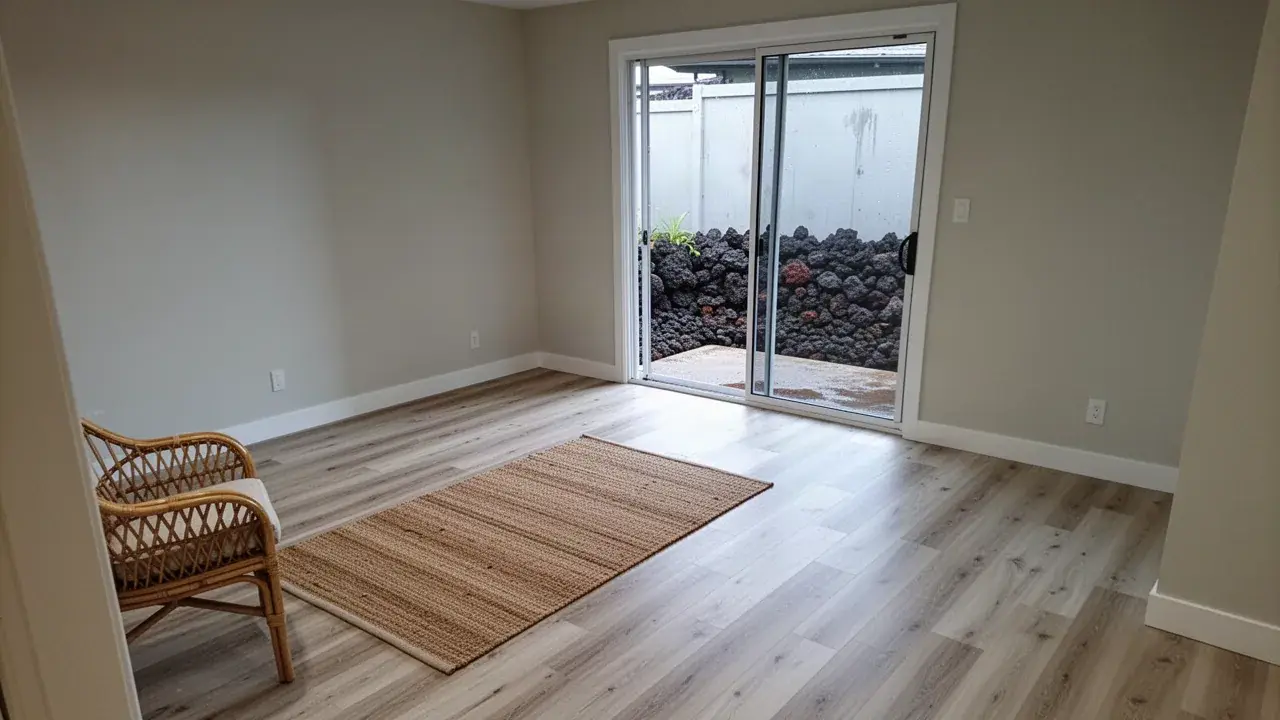
Flood and Water-Damaged Floor Replacement Services on Maui
Water-damaged floor repair starts where the dehumidifiers stop. Once the leak is fixed and the standing water is gone, we take the room from a wet, torn-up slab or subfloor back to a finished floor.
The work usually includes:
- Moisture mapping across the slab or plywood, with readings logged room by room
- Removing ruined flooring, pad, adhesive and swollen baseboards
- Checking subfloors for rot, delamination and mold before anything is covered
- Photos, measurements and an itemized estimate your adjuster can follow
- New flooring, transitions and trim chosen for the room’s flood risk
We work for homeowners, landlords, AOAO boards, property managers and business owners. When a restoration company is already drying the space, we coordinate with them so the new floor goes in on their final readings, not on a guess.
Tear-out follows the same containment and haul-away steps as our floor removal and disposal service.
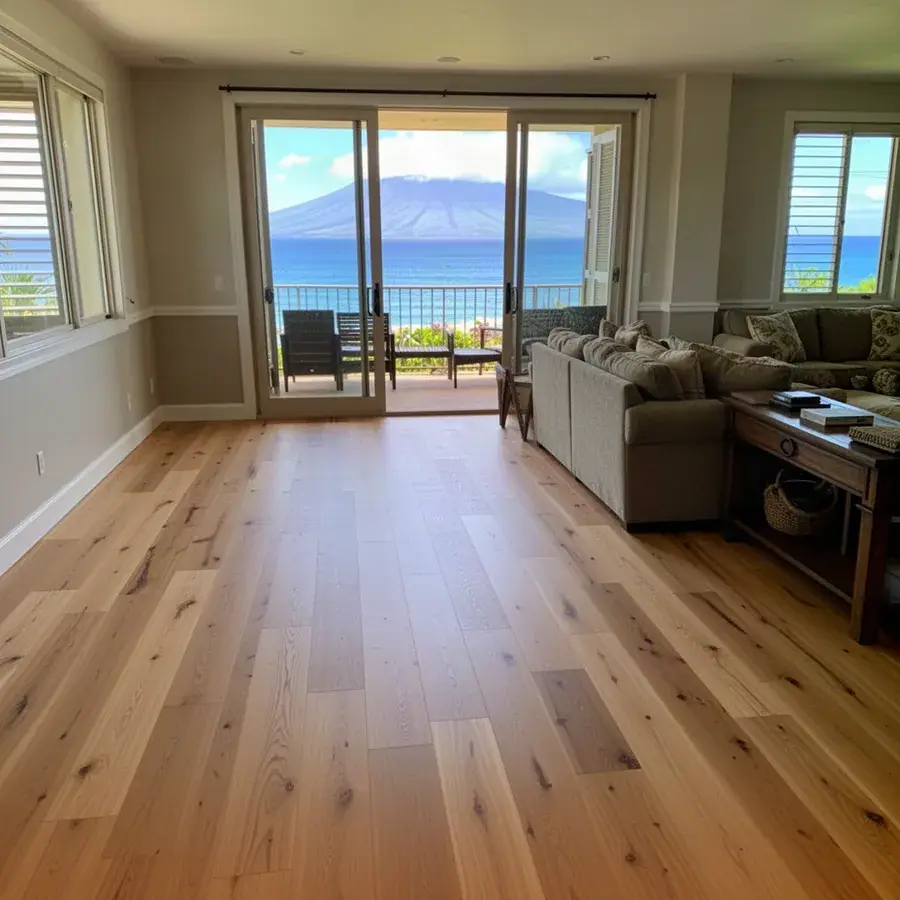
After a Flood: First Steps for Wet Floors
Make the space safe, stop the water, then record everything before anything is thrown out. The March 2026 Kona low storms pushed water into homes from Kihei to Central Maui and fire-scarred Lahaina, and the owners who recovered fastest had clear photos and started drying early.
Make it safe
First hour
Switch off power to wet rooms at the breaker if you can reach it without standing in water. Treat outside floodwater as contaminated and wear boots and gloves.
Stop the source
First hour
Close the main valve for a plumbing leak, or the shutoff behind the fridge, toilet or washer. For storm runoff, block or redirect the flow once the rain eases.
Photograph everything
Before cleanup
Take wide shots of each room, then close-ups of the waterline, cupped boards and swollen edges. Save a piece of the flooring and the box label if you still have it.
Call your insurer
Same day
Open the claim and ask whether they are sending an adjuster or a preferred restoration company. Write down the claim number and every name you speak with.
Pull rugs and contents
Within 24 hours
Get area rugs, boxes and soft furniture off the wet floor. Set wood furniture legs on blocks or foil so they do not wick water or stain.
Start drying
Within 24 to 48 hours
Mold can start growing on wet materials within 24 to 48 hours, so extraction and dehumidifiers should start quickly. Call us once drying is under way and we will plan the tear-out and replacement.
Which Floors Can Be Saved After Water?
It depends on the floor’s core, how long it stayed wet and how dirty the water was. Tile and rigid core vinyl often survive, while laminate and engineered wood rarely do.
Restoration companies grade water using the three categories in the IICRC S500 standard for water damage restoration. The category decides what can be kept.
Category 1: clean water
A burst supply line, ice maker leak or rain through an open slider. Many floors can be dried if extraction starts fast, but clean water left standing for a day or two can degrade to Category 2.
Category 2: gray water
Dishwasher and washing machine overflows, or a toilet overflow without waste. Carpet pad is discarded and other porous materials are judged case by case.
Category 3: black water
Sewage and floodwater that crossed the ground outside, including stream and storm runoff. Carpet, pad, laminate and wood that soaked it up are removed, not cleaned.
| Floor | Typical outcome | Why |
|---|---|---|
| Solid hardwood | Sometimes saved | Clean-water cupping can flatten as boards dry, then be sanded. Black staining, crowning or floodwater usually means replacement. |
| Engineered hardwood | Usually replaced | The plywood or HDF core swells and the top veneer delaminates. |
| Laminate | Replaced | The fiberboard core swells at the joints and never shrinks back. |
| Click-lock SPC vinyl plank | Often reused | Planks are waterproof and can be unclicked, cleaned and reinstalled once the slab dries, unless floodwater contaminated them. |
| Glue-down vinyl | Case by case | Water can release the adhesive or get trapped under the planks, holding moisture against the slab. |
| Ceramic and porcelain tile | Usually saved | Tile shrugs off water. We check for hollow tiles, failed grout and wet backer board on wood subfloors. |
| Carpet and pad | Pad replaced, carpet depends on category | Clean-water carpet can sometimes be dried in place. Carpet soaked by floodwater is discarded. |
Partial saves are common. Our hardwood floor repair service can weave new boards into a room where only one wall cupped, and our vinyl plank and laminate repair team swaps individual damaged planks.
Floors wet after a leak or storm?
Call (808) 229-2386 and we will plan the tear-out, moisture checks and new floor with your restoration company.
Drying and Testing the Subfloor First
New flooring goes in only after the subfloor reaches its target moisture reading, measured with meters and not judged by touch. A surface can feel dry in a day while the plywood or slab underneath stays wet for weeks.
On wood subfloors we use a pin meter and want the plywood within 2 to 4 percentage points of the new wood flooring. Plywood that has delaminated and OSB with swollen edges are cut out and replaced, not dried and covered.
On concrete we take readings across the slab and compare them with the flooring and adhesive limits. Our moisture vapor barrier installation service covers the RH and calcium chloride tests in detail, and when a barrier is worth adding before the new floor.
We also look for mold on the back of removed baseboards, the bottom edge of drywall and the top of the subfloor. If we find growth, a mold remediation contractor treats it before we cover anything.
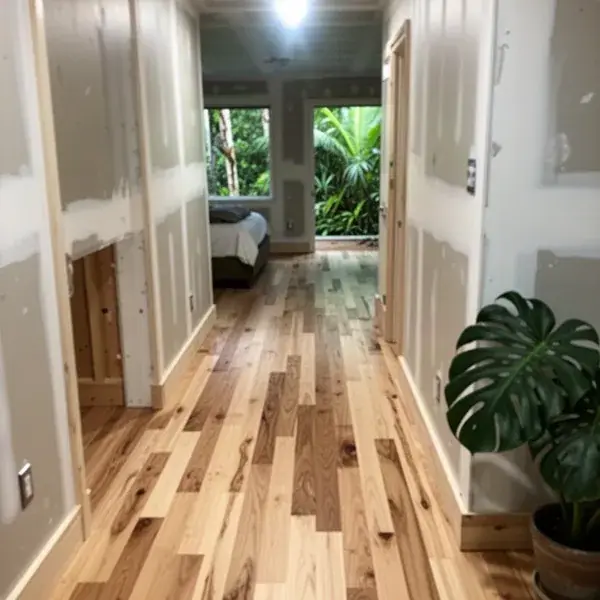
Raised homes need a look underneath too. In older Wailuku, Upcountry and North Shore homes we check the crawlspace for standing water, soaked insulation and soft joists, and our subfloor repair and floor leveling service handles plywood and joist replacement.
A wood subfloor under active drying equipment often reaches target in 3 to 7 days. A slab soaked by floodwater can take several weeks or longer, especially in humid windward areas like Haiku.
Working With Your Insurance Claim
We give your adjuster what they need to price the floor accurately: dated photos, moisture readings, measurements and an itemized estimate. Coverage decisions stay between you and your insurer or public adjuster, and we do not negotiate claims.
What our documentation package includes:
- Dated photos of every room before, during and after tear-out
- Moisture readings by room, plus the restoration company’s drying logs when they share them
- Square footage per room measured on site, with waste listed as its own line
- Separate line items for removal, disposal, subfloor repair, leveling, underlayment, flooring, trim and transitions
- Product identification from your sample or box label, so the replacement is like kind and quality
Matching is often the sticking point. If the original plank or carpet has been discontinued, we document that with product details and show the closest current matches, which gives your adjuster what they need to decide how far the replacement runs through connected rooms.
Permits and Recovery Resources
Replacing floor coverings like for like usually does not need a building permit on Maui, but structural subfloor repairs, framing and electrical work can. We confirm with the County before that part of the job starts.
Maui County’s Development Services Administration links to its Disaster Recovery Building Permit page for repairs tied to the 2023 wildfires and the March 2026 flood. FEMA also opened Individual Assistance to Maui County residents affected by the March Kona low, so keep copies of our estimate and invoices for any application.
Choosing Floors That Handle the Next Flood
If a room has flooded once, choose a floor that can get wet, dry out and stay in place. FEMA’s guidance on flood damage-resistant materials ranks concrete and ceramic tile among the most resistant floor surfaces.
Porcelain tile
Set in cement-based thinset on a slab, it survives floodwater with little more than cleaning and a grout check. Our porcelain tile installation service covers large-format and wood-look options.
SPC rigid core vinyl
Waterproof planks can be unclicked, dried and reinstalled after a clean-water leak. Our luxury vinyl plank installation uses SPC cores in most slab homes.
Sealed or polished concrete
With no floor covering to lose, a sealed slab only needs cleaning and drying. Polished concrete floors suit ground-floor rentals, lanai-level rooms and garages.
Raised-floor upgrades
On post-and-pier homes, exterior-rated plywood resists swelling better than OSB, and clear crawlspace vents help the structure dry. Keep laminate and engineered wood out of the lowest rooms.
In flood-prone rooms, area rugs over a hard floor are far easier to replace than wall-to-wall carpet and pad.
FAQ
Water Damage FAQ
Can water-damaged hardwood be saved?
Sometimes. Solid hardwood that cupped from a clean-water leak often flattens as it dries over 2 to 6 weeks and can then be sanded and refinished. Boards that crowned, turned black, pulled loose from the subfloor or soaked in floodwater usually need replacing.
Engineered hardwood is harder to save because its core delaminates. Our hardwood floor repair service can replace damaged sections and blend them into the boards that survived.
Does laminate need replacing after a flood?
Almost always. Laminate has a high-density fiberboard core that swells at the joints when it gets wet and does not shrink back after drying. After floodwater, the foam underlayment beneath it is contaminated as well.
We remove it, dry and test the subfloor, then replace it with a water-resistant laminate or a waterproof SPC vinyl plank.
How long should a floor dry before new flooring goes in?
Until the moisture readings meet the flooring and adhesive manufacturers' limits, not for a set number of days. A plywood subfloor under drying equipment often gets there in 3 to 7 days. A flooded concrete slab can take several weeks or longer, so we test before installing and keep the readings with your job file.
Where we repair water-damaged floors on Maui
Get a quote
Call Us About Water-Damaged Floors
Call (808) 229-2386 or send photos of the rooms affected. We will check the moisture, document the damage and send a written quote to repair or replace your floors.
- Mon to Sat 7am to 9pm, Sun 9am to 9pm
- 1710 W Kaahumanu Ave, Wailuku, HI 96793
- Licensed, insured and backed by a 1-year labor warranty