Baseboard, Trim and Transition Installation on Maui
Maui Prestige Flooring installs baseboards, quarter round, shoe molding and transition strips that finish new floors cleanly in homes, condos and commercial spaces across Maui. Trim is the last thing we fit on most flooring jobs, and the first thing your eye lands on.
After 16+ years and more than 1,700 jobs, we know that sloppy trim makes a good floor look amateur. Trim also hides the expansion gap every floating floor needs, and the wrong profile at a lanai slider can let water and sand under the planks.
We choose trim materials that survive humidity, mop water and termites, cut every joint tight and leave it caulked and ready for paint. Trim is priced on the same written quote as your flooring.
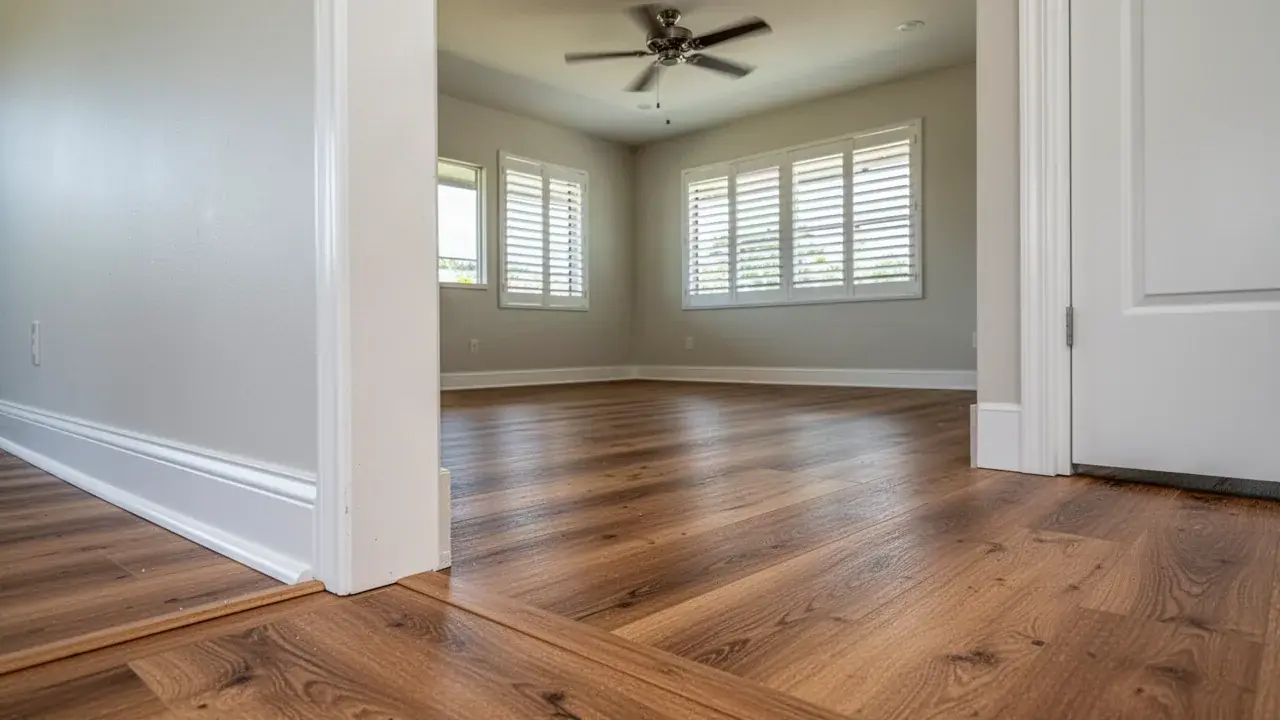
Baseboard and Floor Trim Installation Services
We install the trim that sits where your new floor meets walls, doors, stairs and other floors. On most jobs that means resetting or replacing baseboards, adding quarter round or shoe molding where needed and fitting every transition.
What is included:
- Removing existing baseboards carefully for reuse, or replacing them
- New baseboards in primed MDF, PVC, finger-jointed pine or hardwood
- Quarter round or shoe molding to cover expansion gaps
- T-moldings, reducers, end caps and stair nosings matched to the floor
- Undercutting door jambs and casings so flooring slides underneath
- Nail holes filled, joints caulked and trim left ready for paint
Trim is part of almost every install, from laminate flooring installation to tile. We also replace swollen baseboards after a leak as part of our water and flood damaged floor repair work.
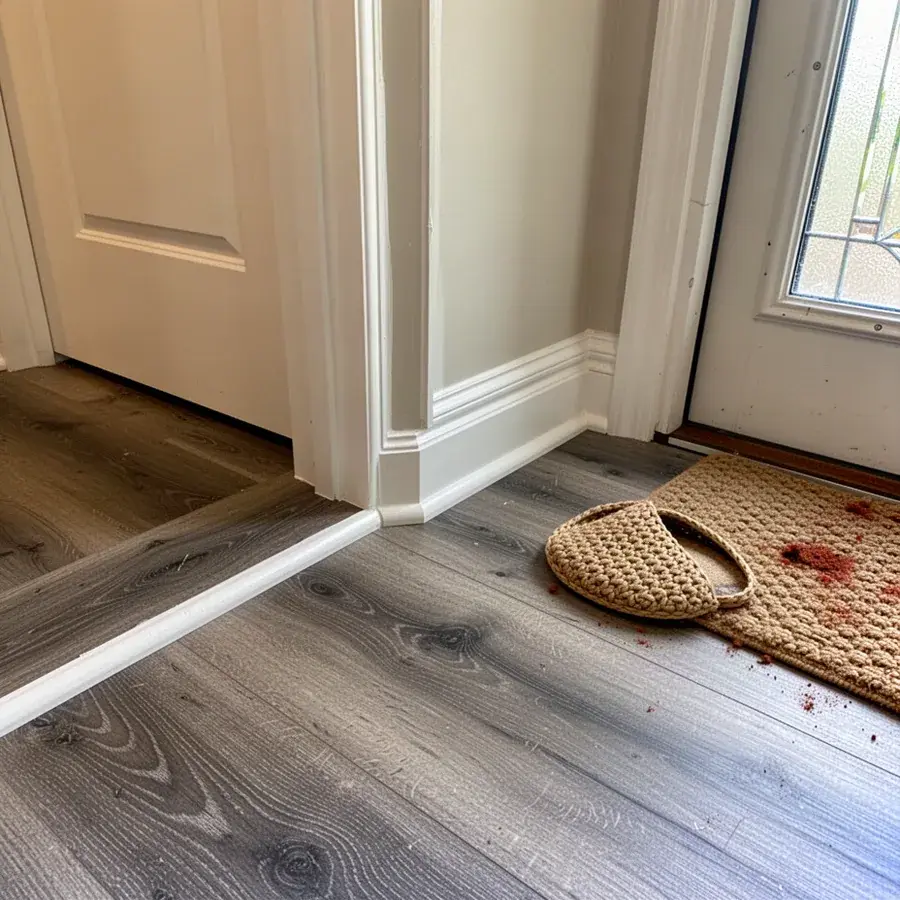
Baseboard vs Quarter Round vs Shoe Molding
Baseboard is the tall board that covers the joint between wall and floor. Quarter round and shoe molding are small strips nailed to the baseboard to cover the gap at the floor edge, and you only need one of them when that gap cannot be hidden any other way.
| Factor | Baseboard | Quarter round | Shoe molding |
|---|---|---|---|
| Size | 3 to 7 1/4 inches tall, about 1/2 to 3/4 inch thick | 3/4 x 3/4 inch quarter circle | About 1/2 x 3/4 inch, taller than it is deep |
| Job | Covers the wall joint and protects drywall | Covers expansion gaps and uneven edges | Same job with a slimmer profile |
| Look | The main design element | Rounder and more casual | Neater, reads as part of the baseboard |
| With floating floors | Covers the gap alone when reset after install | Common when baseboards stay in place | Good when the gap is 3/8 inch or less |
Our default is to pull the baseboards, install the floor and reset them over the gap, which gives the cleanest look. Quarter round or shoe molding goes on only where baseboards cannot come off, such as cabinet toe kicks and walls clad in stone.
Transitions Between Floors
Transitions bridge the joint where one floor meets another floor, a door or a stair edge, and they let floating floors expand without buckling. The right profile depends on the height difference between the two surfaces.
T-Moldings
A T-molding covers the joint between two floors of the same height, such as vinyl plank meeting laminate in a doorway. It is also the expansion break floating floors need in long runs, commonly around 40 feet or wherever the manufacturer specifies.
Reducers
A reducer ramps down from a higher floor to a lower one, such as engineered hardwood stepping down to sheet vinyl or a bare slab. Carpet reducers and Z-bars handle the carpet side of a doorway.
Flush Transitions and Stair Nosings
Flush transitions sit level with both floors for a nearly seamless line, and work best when both floors are glued or set solid. Stair nosings finish each tread edge, flush style for glued floors and overlap style for floating ones, as covered on our stair, tread and railing installation page.
Thresholds at Sliders and Lanai Doors
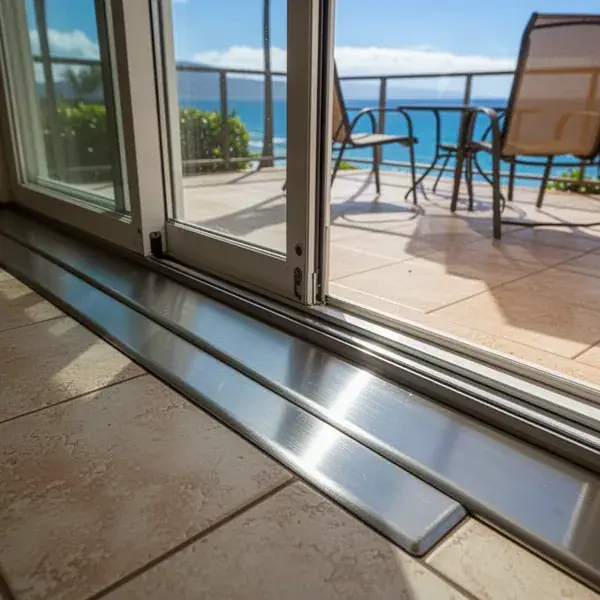
Sliding doors are where sand and wind-driven rain get in. We stop the floor short of the sill track, keep the weep holes clear and seal the threshold or end cap with flexible sealant so water drains outward, not under the planks.
Metal profiles matter near the ocean. Anodized aluminum can pit within a few years in the salt air of Kihei or the West Maui coast, so close to the water we favor stainless steel profiles such as Schluter RENO, PVC, or vinyl and wood profiles matched to the floor.
Undercutting door jambs is part of every transition plan. We trim the bottom of casings and jambs with an undercut saw so the floor slides beneath them, which looks cleaner than scribing around the profile and leaves room for expansion.
Floor done but the edges unfinished?
We fit baseboards, quarter round and transitions that match your new floor and hold up to Maui humidity.
Trim That Holds Up in Humidity
For bathrooms, laundry rooms, entries and beach condos, PVC baseboard is the most durable choice, while primed MDF works well in dry rooms and costs less. Real wood looks best when stained to match a hardwood floor, but it needs sealing and termite awareness.
| Material | Moisture | Termites | Look and finish | Best use |
|---|---|---|---|---|
| Primed MDF | Swells if mop water or a leak reaches the bottom edge | Not a favorite, but not immune | Smooth paint finish, crisp profiles | Bedrooms, living areas, dry rooms |
| Finger-jointed pine | Moderate, joints can show in humidity | Vulnerable | Paints well | Budget painted trim away from water |
| PVC or cellular PVC | Waterproof | Not eaten | Paints well with acrylic latex, slightly softer edges | Bathrooms, laundries, entries, beach condos |
| Solid hardwood | Moves with humidity, needs sealing on all sides | Vulnerable unless treated | Stain grade, matches wood floors | Stained trim beside hardwood |
Whatever the material, we seal the bottom edge and caulk the joint where trim meets a tile floor so mop water cannot wick up. Near the coast we use stainless or coated finish nails, so rust spots never bleed through the paint.
Formosan and drywood termites are both active on Maui, so wood trim along exterior walls deserves a look before it is reused. Our hardwood flooring installation service explains what we check for.
Matching or Replacing Existing Baseboards
If your baseboards are in good shape, we remove them carefully, number each piece and reinstall them over the new floor. If they are swollen, chipped or the wrong height for the new floor, we replace them with a matching or updated profile.
How we take trim off without damage:
- Score the caulk and paint line with a utility knife so wall paint does not tear
- Pry with a wide bar against a shim to protect the drywall
- Pull nails through the back so the face is not split
- Number pieces on the back and bundle them by room
Older Maui homes often have profiles no longer sold off the shelf. We match height and thickness with a close stock profile, or replace a full room so the change looks intentional rather than patched.
A thicker new floor also shrinks the visible baseboard. Going from thin sheet vinyl to tile on backer board can make a 3 inch baseboard look stubby, which makes it a good moment to step up to 4 1/4 or 5 1/4 inch trim.
In homes built before 1978, painted trim is tested for lead before it comes off, as explained on our floor removal and disposal page.
FAQ
Trim and Transitions FAQ
Do baseboards come off during flooring installation?
Usually, yes. Removing them lets the new floor run to the wall with its expansion gap hidden under the baseboard, which looks cleaner than adding quarter round. We pull them carefully, number them and reinstall them unless they are damaged or you want new ones.
Baseboards stay on when they are glued to stone or tile walls or would not survive removal. Then quarter round or shoe molding covers the gap.
Do I need quarter round with vinyl plank?
Only if the baseboards stay in place. Floating vinyl plank needs a gap of about 1/4 inch at the walls, and either a reset baseboard or a quarter round or shoe molding has to cover it. Glue-down vinyl needs a much smaller gap, so the baseboard alone usually covers it.
Can transitions be avoided between rooms?
Often, yes, with one continuous floor. Glue-down vinyl, tile and glued or nail-down hardwood can run through doorways without a break. Floating floors usually need a T-molding in long runs, commonly beyond about 40 feet, or at narrow doorways between large rooms, because the floor has to move with Maui humidity.
Where we install baseboards and transitions on Maui
Get a quote
Finish Your Floor With Clean Trim
Tell us which rooms need baseboards, quarter round or transitions and which floors meet at each doorway. We will measure and include the trim on your written quote.
- Mon to Sat 7am to 9pm, Sun 9am to 9pm
- 1710 W Kaahumanu Ave, Wailuku, HI 96793
- Licensed, insured and backed by a 1-year labor warranty