Terrazzo Flooring Installation on Maui
Maui Prestige Flooring installs and restores terrazzo floors for Maui resort lobbies, shops, restaurants and modern homes. Terrazzo is one of the few floors built to outlast the building around it, and our 16+ years of commercial and residential flooring work go into planning each one.
A terrazzo floor is marble, glass or shell chips locked in an epoxy or cement binder, then ground flat and polished. It is a designed floor, so colors, chip blend and divider strips are settled long before anything is poured.
We handle slab prep, crack suppression, strips, pouring, grinding and sealing, or source precast terrazzo tile when a poured system does not fit. Every job gets a written scope and our 1-year labor warranty.
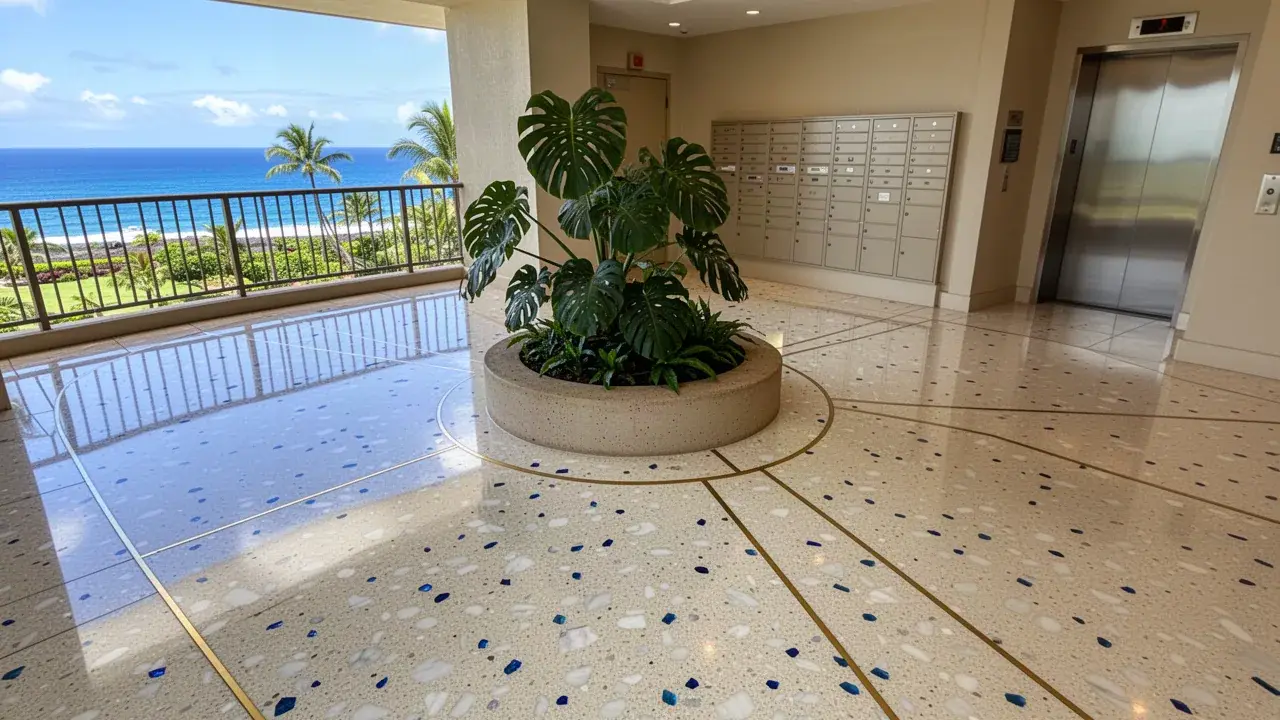
Terrazzo Flooring Installation and Restoration Services
Terrazzo is a floor of marble, glass or other chips set in a binder, poured or troweled in place, then ground flat and polished to expose the chips. Most new floors use an epoxy resin binder only about 1/4 to 3/8 inch thick, while traditional terrazzo uses portland cement.
It suits spaces where a floor has to look remarkable and survive heavy traffic for decades. Think resort and hotel lobbies, retail stores, restaurants, offices and modern homes that want one seamless floor from entry to kitchen.
A terrazzo project with us covers:
- Design help with colors, chips and divider strip layouts
- Slab preparation, moisture testing and crack repair
- Crack suppression membrane and divider strips
- Pouring, curing, grinding and polishing
- Grouting pinholes, sealing and a written care plan
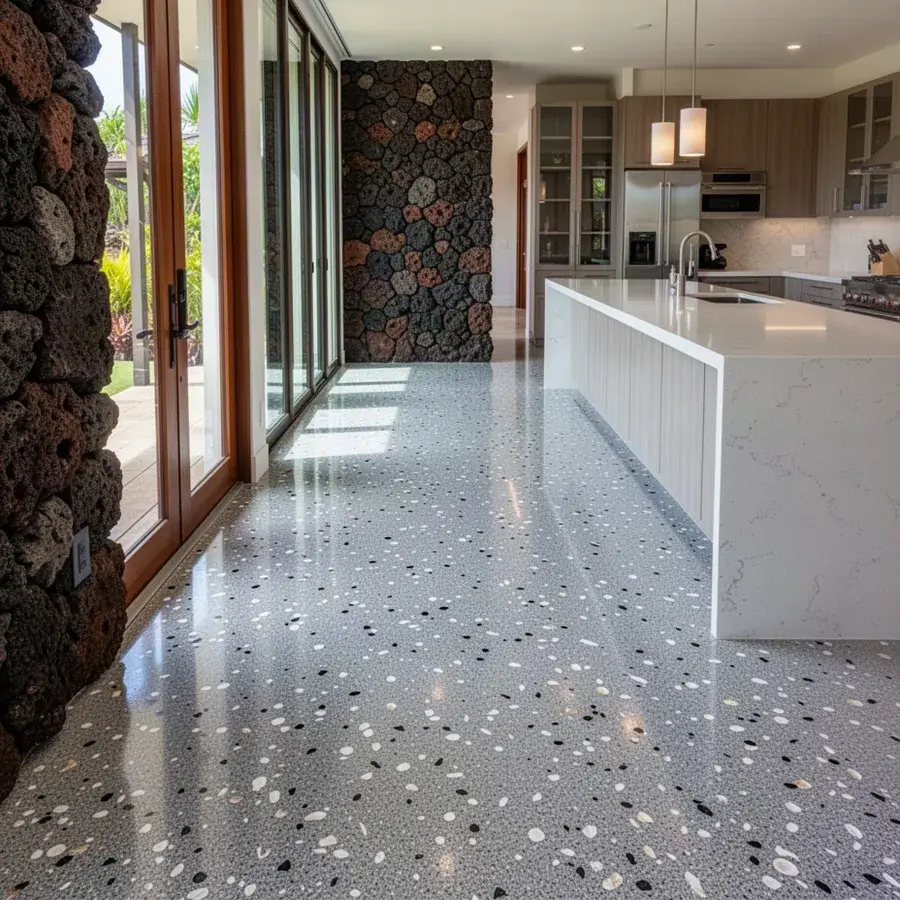
Epoxy Terrazzo vs Cement Terrazzo vs Terrazzo Tile
Epoxy terrazzo is the go-to for interiors, cement terrazzo handles sun and weather, and terrazzo tile is the budget and phased-project option. This is how the three compare.
| Factor | Epoxy terrazzo | Cement terrazzo | Terrazzo tile |
|---|---|---|---|
| Thickness | About 1/4 to 3/8 inch | About 3/8 inch thin-set up to 2.5 to 3 inches for sand cushion systems | Precast tiles, often 12 x 12 inches or larger, set in mortar |
| Weight | About 3 to 4 lb per sq ft | Up to 25 to 30 lb per sq ft for sand cushion | Similar to stone tile |
| Colors | Almost unlimited, bright and saturated | Muted, based on gray or white cement | Limited to the maker’s range |
| Crack resistance | Good over a crack suppression membrane | Lower, needs strips over slab joints | Depends on the setting bed |
| Cure before grinding | About a day | Several days of moist curing | No on-site grind, grout next day |
| Sun and outdoor use | Interior, most epoxies yellow in UV | Yes, for lanais and walkways | Mostly interior |
| Relative cost | Highest | High, varies with system | Lowest of the three |
| Best use | Lobbies, retail, modern homes | Exterior areas, heavy traditional builds | Smaller rooms, phased remodels |
On a Maui slab with old shrinkage cracks, a thin epoxy system over a membrane is usually the safest choice indoors. Its light weight also matters on upper floors of a condo building or hotel, where a sand cushion system would add serious load.
Designing a Terrazzo Floor
A terrazzo design comes down to two choices: what goes into the binder, and how strips divide the floor into colors and shapes. We build sample boards from your picks, because chips look different once they are ground and sealed.
Aggregates: Marble, Glass and Shell
Marble chips are the classic aggregate and the most economical, graded by size from fine #0 chips to larger #2 and beyond. Recycled glass adds bright color and sparkle, while mother-of-pearl and abalone shell add an ocean shimmer.
Price follows the blend. A mostly marble mix costs least, recycled glass sits in the middle, and shell or specialty glass accents cost the most per sq ft.
Colors and Divider Strips
Epoxy binders can be tinted almost any color, and strips of zinc alloy, brass or aluminum separate one color from the next. Brass gives a warm line for logos and accents, while zinc and aluminum read cooler.
Strips also do structural work. We line them up over joints in the slab so the floor has a place to move, and waterjet-cut brass can form logos, compass roses or wave patterns for a lobby.
An ocean palette of sand, blue glass and shell is a natural fit for Maui, but the strongest designs keep it simple. Two or three binder colors with a consistent chip blend age better than a busy floor.
Where Terrazzo Earns Its Cost
Terrazzo costs more up front than almost any other floor, but in a busy space it is often the cheapest floor per year of service. Most poured epoxy terrazzo projects on Maui land between $40 and $80+ per sq ft installed, depending on design, aggregate, strips and slab prep, and your written quote is the exact number.
Compare that with a lobby carpet or vinyl floor that is often replaced every 10 to 15 years. Terrazzo can run for decades with cleaning and resealing, and when it finally looks tired it is reground and repolished instead of torn out.
That math works best in:
- Hotel and resort lobbies, corridors and restaurants, covered on our hotel and resort flooring page
- Shops and offices with constant foot traffic and tracked-in sand, see our office and retail flooring services
- Schools, public buildings and transit areas that plan for 30 years or more
- Homes their owners plan to keep for the long term
Planning a lobby, shop or home with terrazzo?
We review the slab and the design early, so the binder, chips and strips are locked in before material is ordered.
Restoring an Existing Terrazzo Floor
Most worn, dull or stained terrazzo can be restored instead of replaced. Restoration grinds off the damaged surface, repairs cracks and missing chips, and polishes the floor back to its original look.
Older terrazzo sometimes turns up under carpet or vinyl when a lobby or a mid-century home is remodeled. Our floor removal and disposal service lifts the covering and old adhesive, with asbestos testing first where older mastic is involved.
A typical restoration includes:
- Deep cleaning and stripping old waxes and coatings
- Routing and filling cracks, and patching chips with matched epoxy and aggregate
- Grinding with metal-bond diamonds, then honing with resin diamonds
- Polishing to a honed or high-gloss finish
- Sealing with a penetrating sealer suited to the traffic
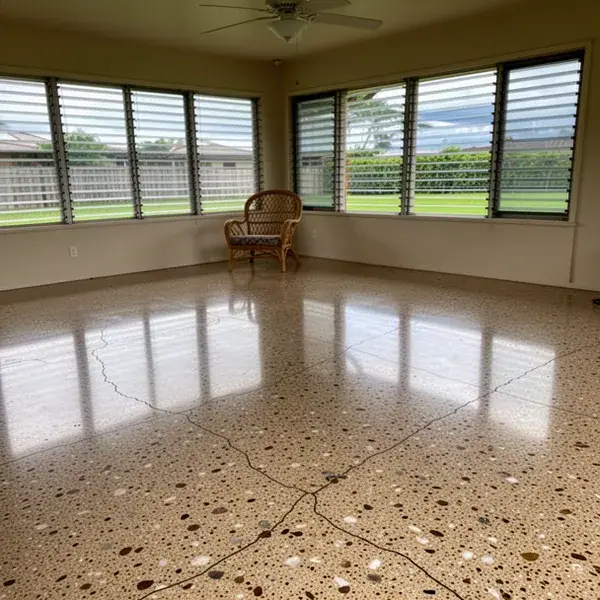
Cracks that follow a slab joint will come back unless the joint is treated. We cut in a divider strip or a flexible joint there, so the repair lasts.
The Terrazzo Installation Process
Slab prep and moisture test
1 to 2 days
The slab is shot-blasted or ground to open the surface, then tested. High readings get a moisture vapor barrier system before any terrazzo goes down.
Crack suppression membrane
1 day
A flexible membrane goes over the slab, or over cracks and joints, so slab movement does not reflect into the finished floor.
Divider strips
1 to 3 days
Strips are bonded to layout lines, lined up over slab joints and set to the finished floor height.
Pour
1 to 3 days
The tinted epoxy and chip mix is troweled between the strips, one color field at a time, slightly above strip height.
Cure
Overnight to 2 days
The binder hardens enough to grind. Cement systems need several days of moist curing at this stage.
Rough grind
2 to 4 days
Coarse diamonds cut the surface down to expose the chips and bring the floor flush with the strips.
Grout
1 day
A thin coat of matching resin fills pinholes and small voids opened by grinding.
Fine grind and polish
2 to 3 days
Progressively finer diamonds take the floor to a honed or polished finish.
Seal and handover
1 day
A penetrating sealer goes on, and we walk the floor with you and leave a written care plan.
A typical 1,000 sq ft epoxy terrazzo floor takes about 2 to 4 weeks on site from slab prep to sealing. Resin and specialty aggregates usually ship from the mainland, and our flooring installation services page explains how we schedule special orders around Maui freight.
If you want a quarried look with real stone instead of chips, our natural stone flooring installation team sets marble, travertine and basalt.
FAQ
Terrazzo FAQ
How long does a terrazzo floor last?
Decades. A well-installed terrazzo floor commonly lasts 40 years or more, and many floors poured in the mid-20th century are still in daily use after regrinding.
The sealer is what wears, not the floor. Reseal every 1 to 3 years in busy spaces, clean with a pH-neutral cleaner and avoid harsh acidic or alkaline products, and the surface keeps its polish.
Can terrazzo be installed over an existing concrete slab?
Yes. Thin-set epoxy terrazzo is designed to go over a sound concrete slab and adds only about 1/4 to 3/8 inch of height.
The slab is ground or shot-blasted clean and tested for moisture, because epoxy terrazzo is sensitive to vapor rising through concrete. Cracks get a membrane, slab joints get matching divider strips, and we check door clearances before the pour.
Is terrazzo slippery?
Dry terrazzo is not especially slippery, but a high-polish finish can be slick when wet. A honed finish, a slip-resistant sealer and walk-off mats at entries keep it safe in daily use.
For resort lobbies near pools or beach paths, the finish and sealer can be specified to meet a target wet DCOF. Quick cleanup of water and sand does more than any coating.
Get a quote
Start a Terrazzo Design
Send us the floor plan, the square footage and a few photos of colors or floors you like. We will review the slab, talk through binder and chip options and send a written quote for your terrazzo floor.
- Mon to Sat 7am to 9pm, Sun 9am to 9pm
- 1710 W Kaahumanu Ave, Wailuku, HI 96793
- Licensed, insured and backed by a 1-year labor warranty