Subfloor Repair and Floor Leveling on Maui
Maui Prestige Flooring repairs subfloors and levels slabs so new floors go down flat, quiet and inside the manufacturer's warranty. We work on concrete slab homes, condos and raised wood-framed houses for homeowners, builders and property managers across the island.
In 16+ years and more than 1,700 jobs, most of the flooring failures we have been called to fix started below the finish floor. Hollow-sounding planks, cracked tile and squeaks are usually a subfloor problem, not a product problem.
We survey the floor with a straightedge and laser, repair what is soft or loose, then grind, patch or pour self-leveling underlayment to spec. You get a written quote for the prep before any flooring is ordered.
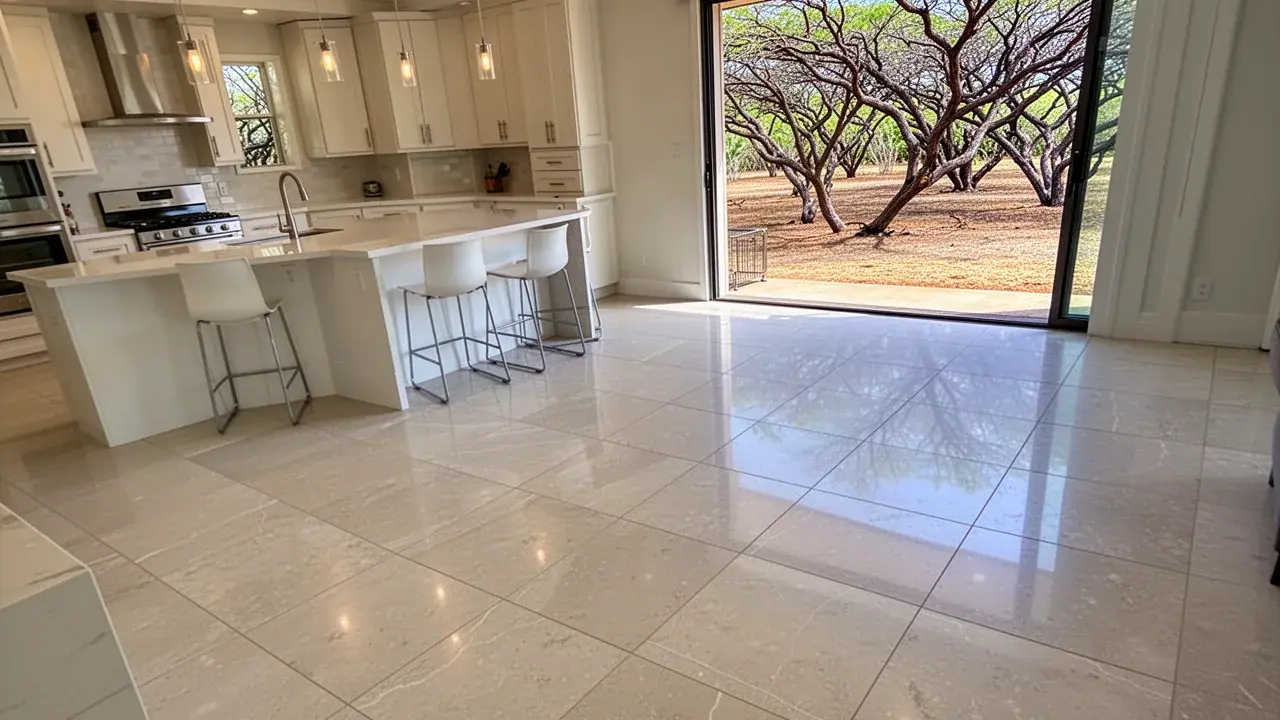
Subfloor Repair and Floor Leveling Services
Floor leveling makes the surface under your new floor flat enough for the product you chose, and subfloor repair makes it solid. Both happen after the old floor comes up and before the new one goes down.
A typical job includes:
- A flatness survey with a 10 foot straightedge and a rotating laser, with high and low spots marked on the floor
- Repairs to cracks, soft plywood, loose panels and squeaks
- Grinding, patching or self-leveling underlayment to the flooring spec
- A final straightedge check, logged on your job sheet, before installation starts
It is for anyone putting new flooring over an uneven slab or a tired wood subfloor, and for owners chasing squeaks and soft spots in an existing floor. The old floor comes up first through our floor removal and disposal service.
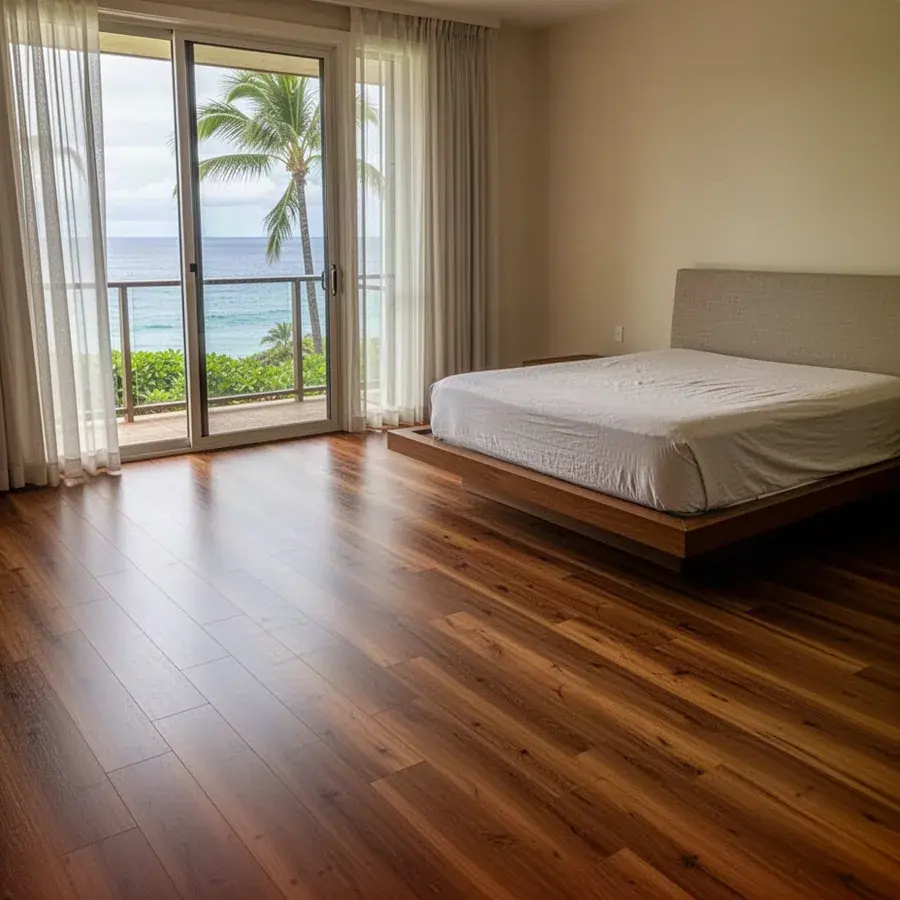
Signs Your Subfloor Needs Attention
Movement, noise and cracks are the main warnings. If you notice any of these, have the subfloor checked before new flooring is ordered.
Soft or spongy spots
Plywood that gives underfoot near a toilet, tub, dishwasher or exterior door usually means water damage or rot below.
Squeaks and creaks
Nails that have worked loose let the plywood rub against joists and fasteners. Floating floors tend to amplify the noise.
Dips and humps
A long straightedge rocks on a hump or shows daylight over a dip. Furniture that wobbles in one spot is another clue.
Hollow sounds
A drumming sound under click-lock vinyl or laminate means the planks are bridging a low spot instead of resting on the slab.
Cracked tile and grout
Cracks running in a line across several tiles usually follow a slab crack or a flexing joist underneath.
Separating planks
Gaps and broken locking joints show the floor flexing over an uneven surface every time someone walks across it.
Leveling Methods We Use
We choose the lightest fix that meets the flatness spec, because each step up adds material, drying time and cost. Many floors need two methods, such as grinding the humps and pouring self-leveler in the low corner.
| Method | What it fixes | When it fits | Typical added time |
|---|---|---|---|
| Grinding high spots | Humps, ridges, trowel marks, old adhesive | Slabs with isolated high spots | A few hours to 1 day |
| Patch and skim coat | Dips under about 1/4 inch, cracks, grout lines | Local low spots, skimming tile before an overlay | Same day to overnight |
| Self-leveling underlayment | Broad dips from 1/8 inch to about 1 inch | Wavy rooms and whole open-plan areas | 1 to 2 days plus dry time |
| Plywood replacement | Rot, delamination, soft spots, swollen OSB | Raised floors, around toilets, tubs and doors | 1 to 2 days |
| Sistering joists | Sagging, cracked or insect-damaged joists | Raised homes with crawlspace access | 1 to 3 days |
Self-leveling compounds we work with include Mapei Ultraplan, Custom Building Products LevelQuik and Laticrete NXT Level, always over the maker’s primer. Grinding is done with diamond cup wheels and a HEPA dust extractor so the dust stays out of the rest of the house.
Is your floor hollow, bouncy or wavy?
We survey the subfloor, mark every high and low spot and price the fix before you order flooring.
Slab Homes vs Raised-Floor Homes
Slab homes have flatness and crack problems, while raised homes have structure and rot problems. Most coastal Maui homes and condos sit on slab-on-grade foundations, and many older inland houses are framed over crawlspaces.
Concrete Slabs: Dips, Humps and Cracks
Slabs are rarely poured flat enough for click flooring or large tile. We grind humps, fill dips with self-leveler and treat hairline shrinkage cracks with a rigid crack filler, or a crack isolation membrane such as Schluter DITRA under tile.
Cracks wider than about 1/8 inch, or with one side higher than the other, can signal movement, so we flag them before covering. Many older slabs also lack a vapor retarder, which is why we test first, as explained on our moisture vapor barrier installation page.
Raised Floors: Rot, Termites and Loose Plywood
Older homes in Wailuku, Upcountry Maui and the North Shore often sit on post-and-pier foundations with plywood or plank subfloors. Leaks at bathrooms and exterior doors rot the plywood, and loose nailing causes squeaks and bounce.
We cut damaged sections back to sound framing, install 3/4 inch tongue-and-groove plywood glued and screwed to the joists, and sister new lumber beside sagging joists. Termite activity is flagged before new wood goes in, and our hardwood flooring installation service explains how we check for Formosan and drywood termites.
Squeaks are fixed from above or below. With the floor open, we drive subfloor screws into the joists along each seam and across the field; from the crawlspace, we shim and glue gaps between joist and plywood.
Bouncy floors are a stiffness issue, not a surface one. Tile needs a stiff structure, commonly L/360 deflection for ceramic and porcelain and L/720 for natural stone, so a raised floor may need blocking or a second plywood layer first.
Structural work such as sistering several joists or replacing a beam can need a building permit from Maui County’s Development Services Administration. We check before the work starts and tell you if one applies.
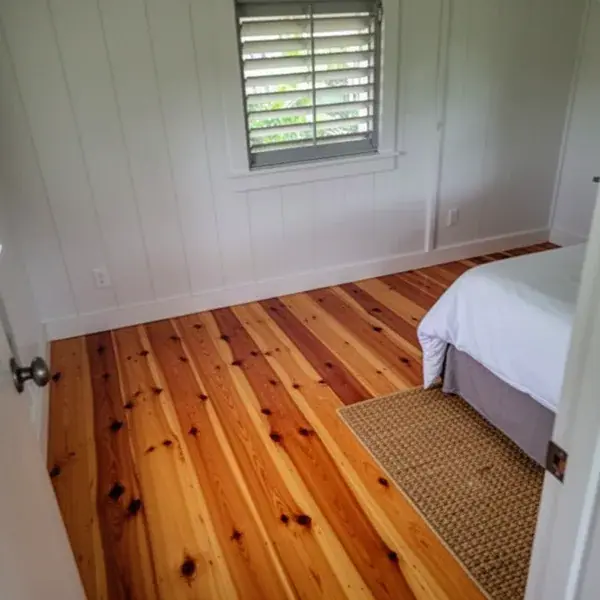
Flatness Specs and Your Flooring Warranty
Every flooring manufacturer publishes a flatness tolerance, and a floor installed outside it can void the product warranty. Most specs are written as the largest gap allowed under a straightedge of a set length.
| Flooring | Common flatness spec | What happens out of spec |
|---|---|---|
| Click-lock vinyl plank and laminate | 3/16 inch in 10 feet (some lines 1/8 inch in 6 feet) | Hollow spots, clicking, gapping, broken locking joints |
| Glue-down vinyl and sheet vinyl | 3/16 inch in 10 feet, plus a smooth patched surface | Bumps and trowel ridges show through |
| Hardwood, nail-down or glue-down | 3/16 inch in 10 feet or 1/8 inch in 6 feet (NWFA guidance) | Squeaks, hollow spots, adhesive failure |
| Tile with all sides under 15 inches | 1/4 inch in 10 feet (ANSI A108.02) | Lippage and cracked tiles |
| Large-format tile, any side 15 inches or more | 1/8 inch in 10 feet and 1/16 inch in 24 inches | Lippage, hollow tiles, cracked corners |
| Carpet | No strict number, but humps show | Worn tracks over high spots |
Leveling is built into every quote for our luxury vinyl plank installation and tile installation service, because those floors are the least forgiving of a wavy slab.
What Subfloor Repair and Leveling Cost
On Maui, grinding and self-leveling typically add $2 to $6 per sq ft to a flooring project, and most slab prep jobs land in that range. Structural repairs are priced once the floor is open, by the sheet of plywood and the joist.
What moves the price:
- Area: a 150 sq ft bathroom carries setup costs that a 1,200 sq ft open plan spreads out
- Fill depth: a 1 inch pour uses about eight times the material of a 1/8 inch skim
- Slab condition: cracks, old adhesive and paint have to be removed or primed
- Moisture: high readings can add a vapor barrier before leveling
- Structural work: rotted plywood, sistered joists, added blocking and any permit
- Access and travel: condo elevators, upstairs units and trips to West Maui, Lanai or Molokai
Hawaii general excise tax is added to the total. Your written quote lists each prep item on its own line, so you see exactly what the leveling costs before you commit.
FAQ
Subfloor and Leveling FAQ
What is self-leveling underlayment?
Self-leveling underlayment is a cement-based compound mixed with water to a pourable consistency so it flows out and finds its own level. It is poured over a primed slab, or over plywood with metal lath, to fill dips from a feather edge up to about 1 inch in a single pour. Once it hardens, it gives tile, vinyl, laminate or wood a flat, smooth base.
How long does a leveled floor need to dry?
Most self-levelers can be walked on in 2 to 4 hours. Tile can often be set the next day, while moisture-sensitive floors such as glue-down vinyl and wood usually wait 16 to 24 hours or longer, depending on the product and pour depth.
Deep pours and humid weather stretch those times, so we follow the manufacturer's data sheet and check moisture before installing.
Should squeaky floors be fixed before new flooring?
Yes. Once new flooring is down, the subfloor is covered and the fix becomes harder and more expensive. A squeak also means the plywood is moving, and that movement can crack tile, wear out click joints and loosen nail-down hardwood over time.
Where we repair subfloors and level floors on Maui
Get a quote
Have Us Check Your Subfloor
Tell us what you are noticing, whether it is squeaks, soft spots or cracked tile. We will survey the floor, mark the problem areas and send a written quote for the repair and leveling.
- Mon to Sat 7am to 9pm, Sun 9am to 9pm
- 1710 W Kaahumanu Ave, Wailuku, HI 96793
- Licensed, insured and backed by a 1-year labor warranty