Cork Flooring Installation on Maui
Maui Prestige Flooring installs cork floors in condos, bedrooms, kitchens, home offices and kids' rooms across Maui. In more than 16 years and 1,700+ flooring jobs, we have seen how much a soft, quiet floor matters in a concrete building, and cork is one of the few natural materials that delivers both.
Cork is the bark of the cork oak tree, packed with tiny air-filled cells that cushion your feet and soak up sound. It does need a plan for sun, sand and water, which is where most cork floors in the islands go wrong.
We test the slab, recommend planks or tiles to suit each room and send a written quote, backed by a 1-year labor warranty.
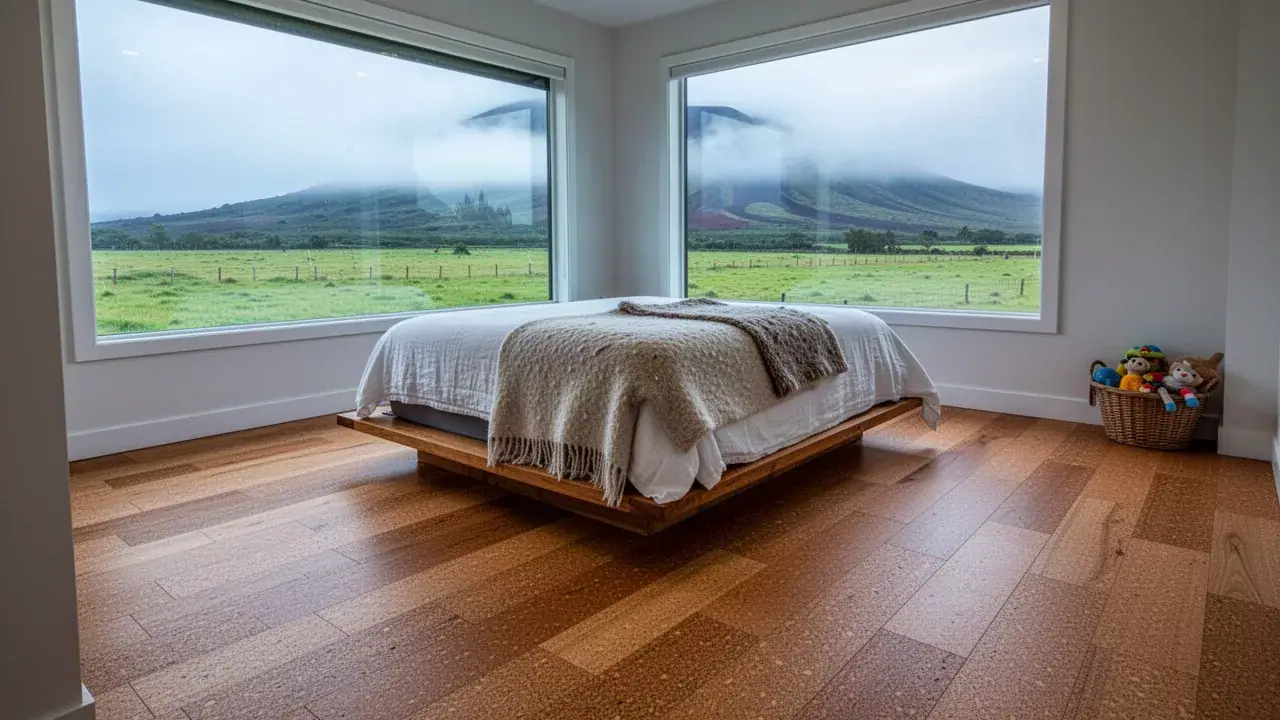
Cork Flooring Installation for Quiet, Comfortable Rooms
Cork flooring is made from the bark of the cork oak (Quercus suber), stripped by hand about every nine years, mostly in Portugal and Spain, without cutting the tree down. The bark is ground, pressed and baked into tiles or planks, keeping millions of tiny air pockets that make cork soft, warm and quiet.
It suits condo owners who want a quieter floor, people who stand for hours in a kitchen or at a standing desk, and families with toddlers who spend their days on the floor. Cork also feels warmer than tile or concrete on a cool Upcountry morning.
Every cork flooring installation we quote includes:
- Moisture readings and flatness checks on the slab
- Removal of the old floor and any leveling or skim coating
- Click-lock or glue-down installation with the right underlayment
- Site sealing and finish coats for glue-down tiles
- Transitions, baseboards or quarter round, and cleanup
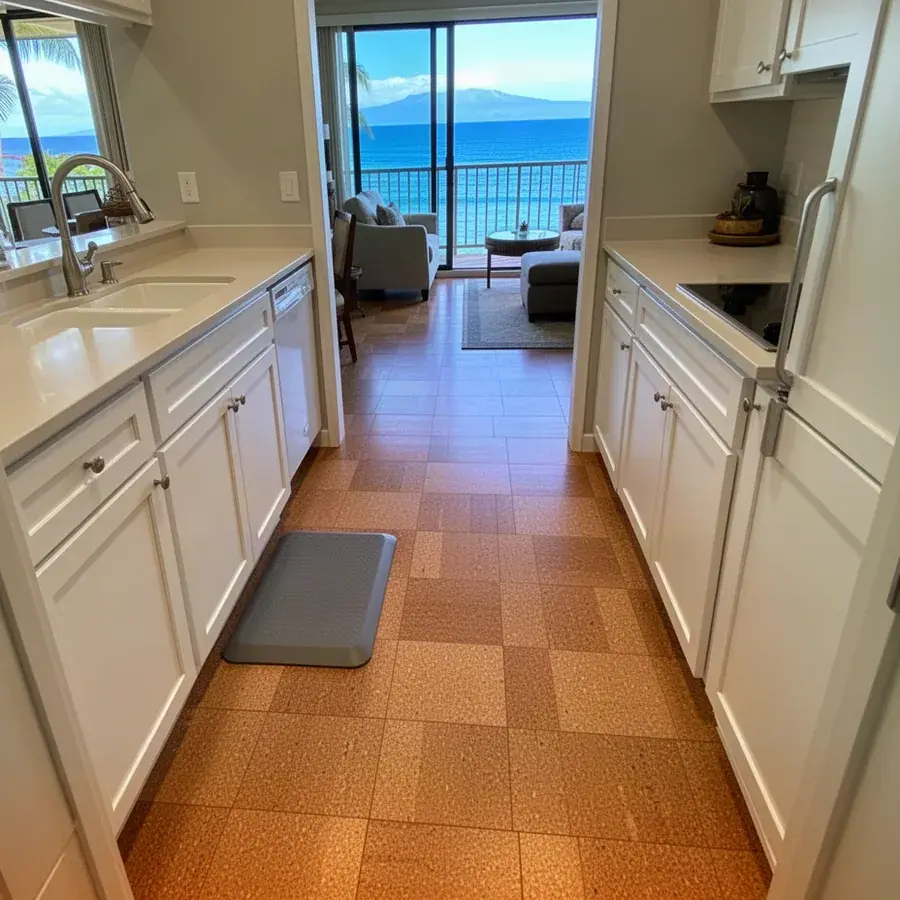
Where Cork Works Best in a Maui Home
Cork works best in dry, indoor rooms where comfort and quiet matter: bedrooms, kitchens, upstairs condos and offices. It is the wrong floor for lanais, full bathrooms and rooms that bake in unfiltered afternoon sun.
| Room | Cork fit | What to plan for |
|---|---|---|
| Bedrooms and kids’ rooms | Excellent | Soft for play and falls, quiet at night |
| Kitchens | Good | Sealed tiles, a mat at the sink, felt pads under stools |
| Upstairs condo units | Excellent with approval | Sound rating paperwork for the AOAO |
| Home offices | Good | A chair mat under rolling chairs |
| Full bathrooms | Poor | Standing water at the tub and toilet |
| Lanais and outdoor rooms | Avoid | Rain, heat and direct UV |
| Rooms facing big west sliders | Only with a sun plan | Window film, shades and finish care |
Grit is the other thing to plan for. Cork’s soft surface forgives a dropped glass, but beach sand and red dirt ground in under shoes dull the finish fast, so walk-off mats at every outside door matter more on cork than on almost any other floor.
For wet rooms and beach-door entries, a luxury vinyl plank installation or tile usually serves better, and cork can pick up in the rooms next door.
Cork Floor Options
Cork comes in three main forms, and the right one depends on how flat your slab is and how much water the room sees. Well-known cork lines include Amorim’s Wicanders, WE Cork and Jelinek.
Click-Lock Cork Planks
Floating planks, usually around 10 to 12 mm thick, with a cork top layer and cork backing around a fiberboard core. They click together over a vapor sheet on concrete and go down fast.
The fiberboard core is the weak point, so spills at the seams need wiping quickly.
Glue-Down Cork Tiles
Solid cork tiles, often 4 to 6 mm thick, bonded to the slab with a contact or water-based cork adhesive. They make the most seamless, natural cork floor.
Thin tiles show every bump, so the slab needs to be very flat and smooth. Site-applied finish coats then seal the seams against spills.
Cork With a Rigid or Vinyl Wear Layer
Hybrid planks put a printed vinyl or rigid wear layer over a cork composite core, such as Wicanders Hydrocork. They look like wood or stone but keep much of cork’s quiet, warm feel.
These are the most water resistant cork option and a good fit for kitchens and rentals.
If you are weighing cork against another natural floor, our bamboo flooring installation page explains how the harder, denser option compares.
Want a quieter, softer floor?
We bring cork samples, check your slab and confirm what your condo association allows.
Protecting Cork From Sun and Moisture
Sun and standing water are cork’s two enemies, and both are easy to manage with a plan. Strong UV through a lanai slider changes cork’s color, and a rug or couch left in one spot leaves a visible outline.
We suggest UV-filtering window film or shades on sun-facing sliders, and moving rugs every few months. On glue-down tiles, a maintenance coat of waterborne finish every 3 to 5 years in a typical home renews both the UV and water protection, sooner in a busy kitchen.
Moisture from below matters just as much. We test every slab, and older slabs without a vapor retarder get a moisture vapor barrier for flooring or a moisture-tolerant adhesive. Thin glue-down tiles need a smooth, flat base, which our subfloor repair and floor leveling service handles.
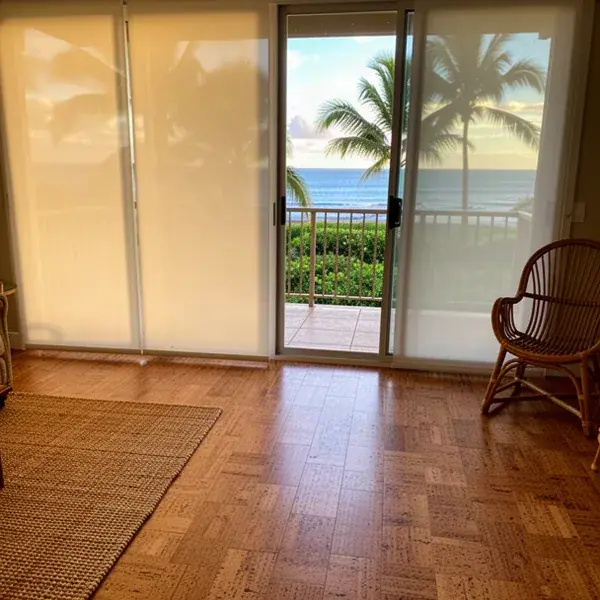
Cork for Sound Control Between Floors
Cork absorbs impact noise, like footsteps and dropped toys, far better than tile, stone or most rigid vinyl, which is why it is a favorite in concrete condo buildings. Its cell structure also dampens the hollow click you hear on many floating floors.
On its own, though, a cork floor may not meet your association’s minimum sound rating. The rating belongs to the whole assembly, so we pair cork with a tested acoustic mat when the AOAO requires it, and our acoustic underlayment installation page covers the products.
Cork is also sold as a separate underlayment sheet, often 6 to 12 mm thick, that goes beneath tile, engineered wood or vinyl. That is a different product from a cork floor you walk on, and we will tell you which one your building actually needs.
How a Cork Floor Gets Installed
Click-lock cork goes down in a day or two, while glue-down tiles take longer because the finish coats need time to cure. Here is how both run.
Test and prep
1 to 2 days
We test slab moisture, remove the old floor, grind high spots and skim coat for glue-down tiles.
Acclimate
48 to 72 hours
Cork boxes open in the rooms so the material adjusts to your home’s temperature and humidity.
Layout
A few hours
We plan the starting wall and row widths so there are no slivers at doorways or along the slider.
Install
1 to 2 days
Planks click together over a vapor sheet, or tiles are glued with contact adhesive and rolled with a heavy floor roller.
Seal and finish
1 to 2 days
Glue-down tiles get two or three coats of waterborne polyurethane to seal the seams. Factory-finished planks skip this step.
Cure and walkthrough
2 to 3 days
Light foot traffic after about 24 hours, furniture back after 48 to 72 hours with felt pads. We walk the floor with you and leave spare cork.
A typical 600 square foot condo takes about 2 to 3 days with click planks, or 4 to 6 days with glue-down tiles including the finish cure. Special-order cork usually ships from the mainland in about 4 to 6 weeks, so we confirm stock before setting a date.
FAQ
Cork Flooring FAQ
Is cork flooring waterproof?
No, but it is water resistant. Natural cork contains suberin, a waxy compound that repels water, yet the seams and any fiberboard core can swell if water sits on them. A sealed glue-down tile floor handles everyday spills well, and hybrid planks with a vinyl wear layer are sold as waterproof.
Wipe spills promptly and keep cork out of full bathrooms and laundry rooms that could flood.
Do pets damage cork floors?
Cork handles pets better than most people expect, because it gives slightly under claws and often recovers from light marks. Long nails and large dogs that run and skid will still scratch the finish over time.
Keep nails trimmed, put a tray under water bowls, and clean accidents quickly so urine does not soak into the seams. A maintenance coat of finish removes most surface wear.
How long does cork flooring last?
A well-kept cork floor often lasts 20 years or more in a home. Glue-down tiles that get a fresh coat of finish every few years tend to last longest, since the finish takes the wear instead of the cork. Floating planks with a factory finish last as long as that top layer, which depends on sun, sand and traffic.
Get a quote
See Cork Samples in Your Own Light
Ask us to bring cork samples to your home so you can see them in morning and afternoon light. We will check the slab, talk through any condo sound rules and send a written quote.
- Mon to Sat 7am to 9pm, Sun 9am to 9pm
- 1710 W Kaahumanu Ave, Wailuku, HI 96793
- Licensed, insured and backed by a 1-year labor warranty