Moisture Vapor Barrier Installation on Maui
Maui Prestige Flooring tests concrete slabs and wood subfloors for moisture and installs vapor barriers before new flooring goes down, for homeowners, builders and businesses across Maui. In 16+ years and more than 1,700 jobs, wet slabs have been behind more failed floors than any other single cause we see.
Moisture moves up through concrete as invisible vapor, then shows up months later as cupped wood, peeling glue, loose tile or a musty smell. A test before installation costs far less than tearing out a floor a year after.
We use the ASTM test methods that flooring manufacturers write into their warranties, record every result and match the barrier to the readings and the floor. You get a written report, a written quote and a 1-year labor warranty on our work.
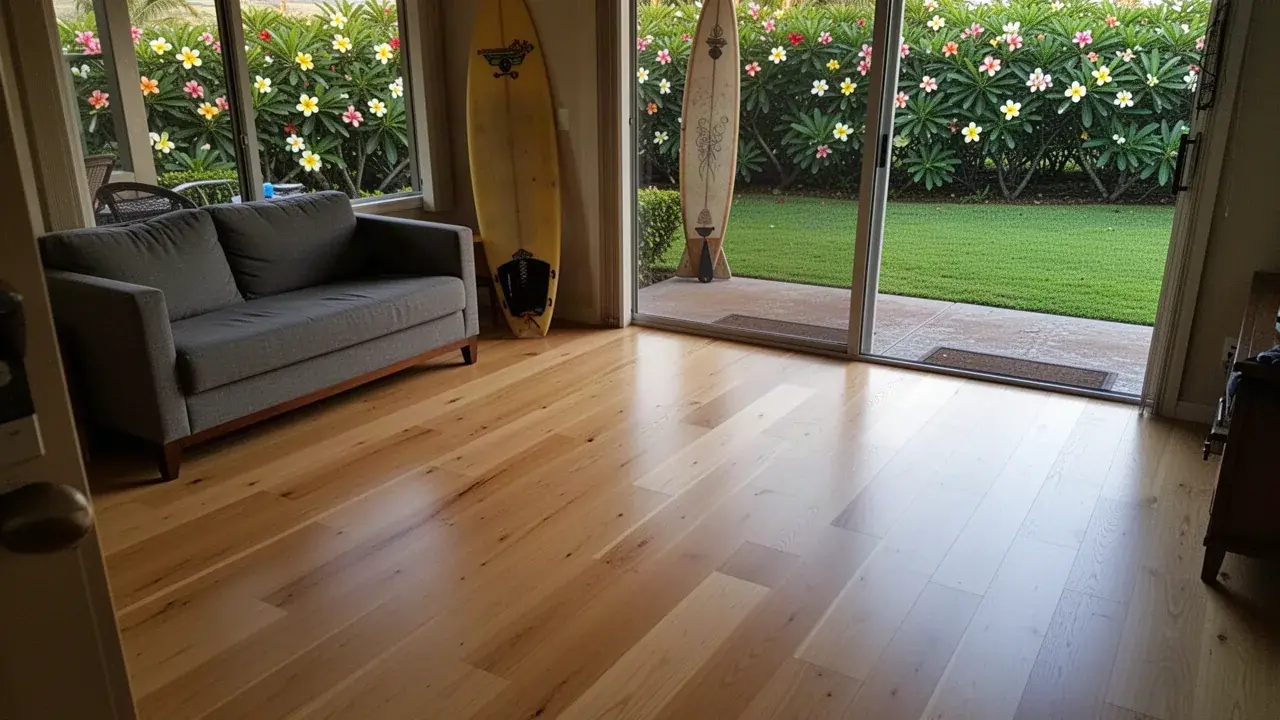
Moisture Testing and Vapor Barrier Installation for Maui Slabs
A moisture barrier for flooring on concrete is a layer that slows water vapor rising out of the slab before it reaches the floor covering or its adhesive. We decide whether you need one, and which kind, by testing first rather than guessing.
This service is for anyone putting wood, vinyl, laminate, cork, rubber, sheet goods or a resin coating over concrete, and for raised homes with plywood subfloors. It includes:
- Moisture testing with ASTM F2170 RH probes, ASTM F1869 calcium chloride kits or wood meters, depending on the floor
- A written report with test locations, readings and room conditions
- Comparing results to your flooring and adhesive manufacturer’s limits
- Choosing and installing the right sheet, membrane or epoxy moisture mitigation system
- Copies of every record for your warranty file
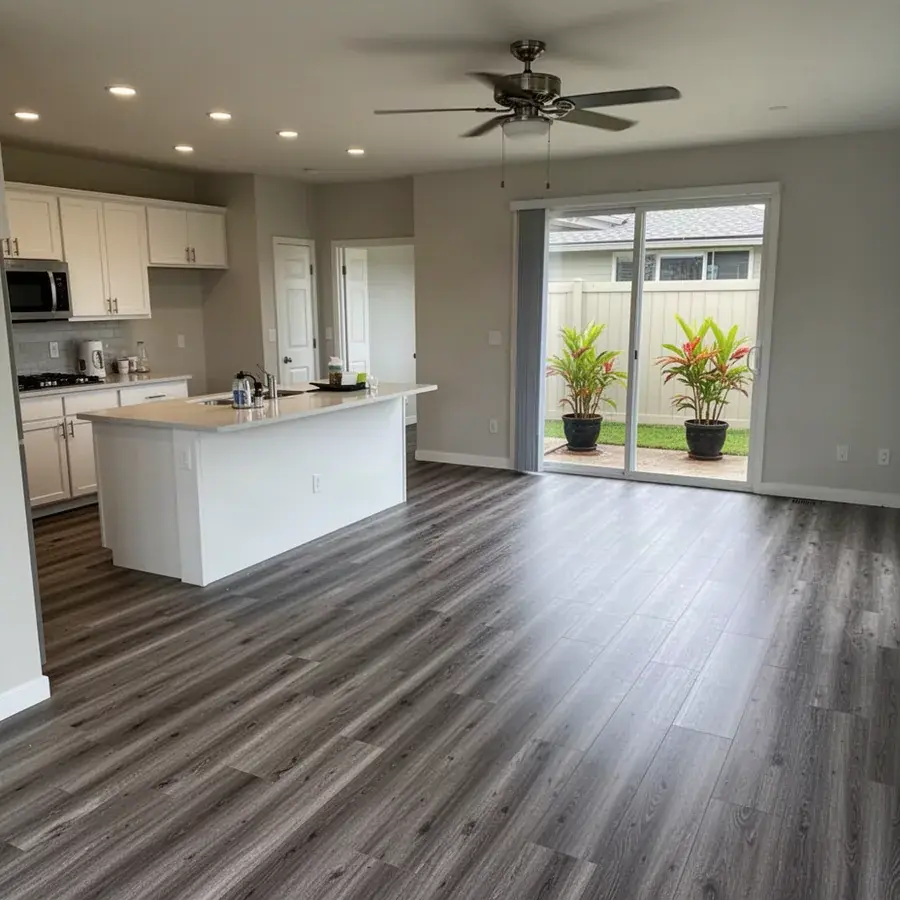
Why Maui Slabs Push Moisture Into Floors
Most coastal Maui homes and condos sit on slab-on-grade foundations, and many older slabs were poured straight onto the ground with no vapor retarder underneath. Soil moisture then wicks up through the concrete for the life of the building.
No retarder under the slab
Current practice puts a polyethylene sheet meeting ASTM E1745 under a new slab, commonly 10 to 15 mil thick. Many older Maui homes and condos were poured without one, or with a thin sheet that tore during the pour.
Humid air all year
Coastal humidity averages roughly 70 to 80 percent, so a slab never dries out the way it would in a desert climate. Closing a home up and running air conditioning changes the vapor drive again.
Irrigation and rain
Sprinklers against a foundation, lanai planters and heavy windward rain in Paia, Haiku and the North Shore soak the soil beside the slab. Readings often jump near exterior walls and sliding doors.
Sealed-over concrete
Bare concrete breathes into the room. Cover it with glue-down vinyl, rubber, a coating or wood and that vapor is trapped right where the adhesive sits.
How We Test a Slab Before Flooring
We test with the method your flooring manufacturer specifies, which today is usually in-situ relative humidity. The building should be at normal living temperature and humidity for about 48 hours first, with the air conditioning or windows set the way they will be once you move in.
In-Situ Relative Humidity Probes (ASTM F2170)
We drill holes to 40 percent of the slab depth for a slab drying from the top, seal sleeves in them and read the humidity inside the concrete after at least 24 hours of equalizing. It shows what the floor will face once the slab is covered, which is why most wood, vinyl and adhesive makers now ask for it. Many products allow about 75 to 85 percent RH, and moisture-tolerant ones allow 90 percent or more.
Calcium Chloride Testing (ASTM F1869)
A dish of calcium chloride sits under a sealed dome on a lightly ground patch of slab for 60 to 72 hours, then it is weighed to find the moisture vapor emission rate in pounds per 1,000 sq ft per 24 hours. Many resilient floors and adhesives list a limit of 3 to 5 pounds. It reads only the top of the slab, so we use it where a manufacturer still specifies it.
Moisture Readings for Wood and Plywood
On raised Upcountry and North Shore homes, we read plywood and plank subfloors with pin and pinless meters at many points. Under NWFA installation guidelines, the subfloor should be within about 2 to 4 percent of the new wood flooring’s moisture content, and plywood generally no wetter than about 12 percent.
Handheld concrete meters, such as a Tramex, are screening tools only. We use them to map wet areas quickly and decide where probes go, but manufacturers do not accept a meter reading as a test result.
Planning a new floor over concrete?
Book a moisture test before you order, so the floor you choose matches the slab you have.
Vapor Barrier Options and When Each Fits
A vapor retarder slows moisture and a vapor barrier nearly stops it; the difference is the permeance rating. Under-slab sheets are rated to ASTM E1745, while above the slab we match the product to the floor and the readings.
| Option | Where it fits | Cost tier |
|---|---|---|
| 6 mil polyethylene sheet | Floating laminate, engineered wood and some vinyl on slabs with moderate readings | Low |
| Combination underlayment | Floating floors where one layer adds a film, cushion and sound control | Low |
| Fortifiber Aquabar B | Nail-down wood over plywood or plank subfloors, slowing vapor from a crawlspace while letting the floor breathe | Low |
| Adhesive with built-in membrane | Glue-down engineered wood and some vinyl, using one urethane product that bonds and controls moisture to its rated limit | Mid |
| Two-part epoxy moisture mitigation | High-RH slabs before glue-down vinyl, rubber, sheet goods, coatings or wood | Highest |
Fortifiber Aquabar B is an asphalt-laminated kraft paper, the long-standing choice under nail-down hardwood on wood subfloors. A two-part epoxy moisture mitigation system is a 100% solids epoxy applied to a diamond-ground slab, often followed by a primer and self-leveler, and systems from manufacturers such as Mapei and Laticrete are rated for very high RH levels.
Adhesives have their own moisture limits, separate from the flooring. A pressure-sensitive vinyl adhesive may allow a much higher RH than a standard wood adhesive, so we check both data sheets.
Most sheet barrier jobs land between $1 and $4 per sq ft installed, and two-part epoxy moisture mitigation typically runs $4 to $8 per sq ft including grinding. Your written quote is the exact number, based on the readings and square footage.
Signs Moisture Is Already Damaging Your Floor
The most common signs are cupped or gapping wood, loose tiles, adhesive oozing at vinyl seams, white powder on the slab and a musty smell. Any one of them means test before you replace the floor, or the new one will fail the same way.
- Cupping: wood boards with raised edges and a low center are taking on moisture from below
- White powder (efflorescence): mineral salts carried up by moisture and left on the slab or in grout lines
- Loose or hollow tiles: thinset losing its bond as moisture and alkalinity attack it
- Adhesive ooze: vinyl planks sliding apart and glue squeezing up at seams as high-pH moisture breaks it down
- Musty smell or dark spots: mold growing under rugs, underlayment or baseboards
If the floor failed after a leak or flood, our water and flood damaged floor repair service covers drying, removal and insurance documentation. If it failed from slab vapor alone, the fix is a mitigation system plus a new floor, not just new planks.
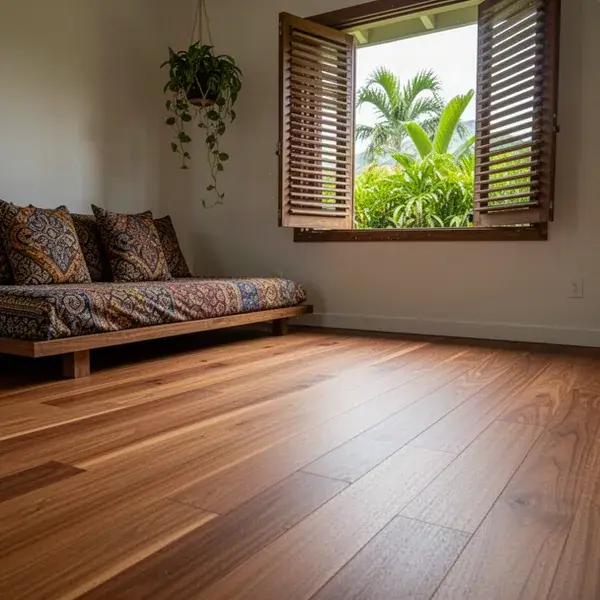
Vapor Barriers and Your Flooring Warranty
Most flooring and adhesive manufacturers exclude moisture damage unless the slab was tested by their stated method and found within limits, or treated with an approved system. Without test records, a moisture claim is usually denied.
Each floor tolerates different readings. Our luxury vinyl plank installation, engineered hardwood installation and epoxy flooring and concrete coatings pages show how moisture limits shape each product choice.
When a slab also needs grinding or self-leveler, our subfloor repair and floor leveling service handles the flattening in the same visit as the barrier.
FAQ
Vapor Barrier FAQ
Do I need a moisture barrier under vinyl plank on concrete?
It depends on the product and the readings. Many floating rigid-core planks have an attached pad and allow fairly high slab RH, but some still require a 6 mil poly sheet, and glue-down vinyl depends on the adhesive's own limit.
We test the slab and read the specific product's installation guide before you order, then add a barrier only when the numbers or the warranty call for it.
What if my slab is too wet for flooring?
You have two good options. A two-part epoxy moisture mitigation system can go over the ground slab so almost any floor can be installed on top, or you can choose a floor that tolerates moisture, such as porcelain tile or polished concrete.
Waiting rarely fixes an old slab, because the moisture comes from the ground under it. On new construction, more drying time with the air conditioning running can bring readings down.
How long does slab moisture testing take?
Plan on two visits over 1 to 3 days. RH probes need at least 24 hours to equalize after drilling, and calcium chloride tests sit for 60 to 72 hours, after the building has been at normal living conditions for about 48 hours.
We test early, ideally before you order flooring, so the results never hold up your install date.
Where we test slabs and install vapor barriers on Maui
Get a quote
Book a Slab Moisture Test
Tell us what floor you are planning and where the slab is. We will schedule the test, send a written report and quote any barrier the readings call for.
- Mon to Sat 7am to 9pm, Sun 9am to 9pm
- 1710 W Kaahumanu Ave, Wailuku, HI 96793
- Licensed, insured and backed by a 1-year labor warranty