Concrete Floor Installation on Maui
Maui Prestige Flooring turns bare and tired slabs into finished concrete floors across Maui, from new pours in Lahaina rebuilds to 1970s Kihei condos and Kahului shops. Over 16 years and more than 1,700 flooring jobs, we have learned that a concrete floor is only as good as the prep under it and the sealer on top.
This service covers decorative concrete: acid stains and water-based dyes, microcement, self-leveling toppings and clear-sealed natural slabs. It is for owners who want the slab to be the floor, not a base for something else.
Every concrete floor we finish starts with a moisture reading and a written plan for cracks and joints. You get a written quote, a clear cure schedule and a 1-year labor warranty on our workmanship.
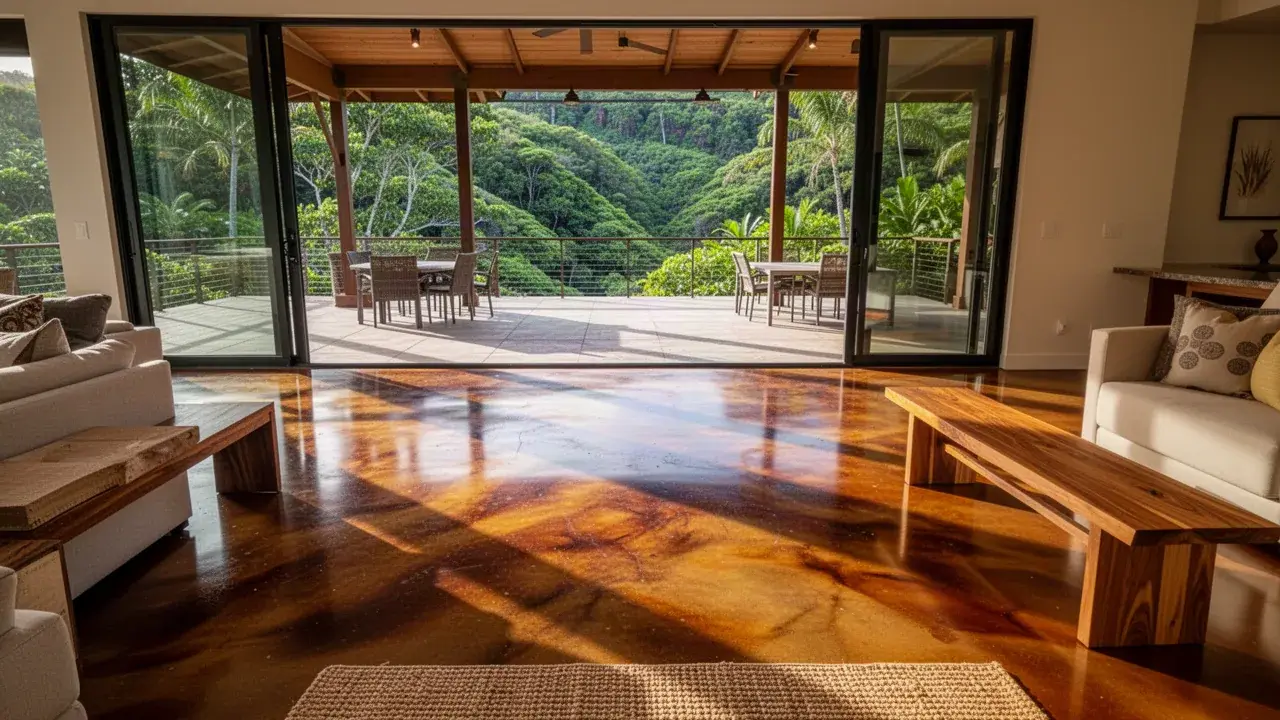
Concrete Floor Installation: Overlays, Toppings and Finished Slabs
Concrete flooring installation means giving a slab a finished, walkable surface instead of covering it with another material. We do it two ways: finishing the slab directly with stain, dye and sealer, or installing a thin cement-based overlay when the original surface is too stained, patched or rough to show.
It suits modern homes going for a clean minimalist or industrial look, West Maui and Kula rebuilds, retail floors, covered lanais, garages and art studios. Concrete stays cool underfoot, which counts for a lot in a leeward home in August.
Every concrete floor project we quote includes:
- Slab inspection, crack mapping and a moisture reading
- Removal of old adhesive, paint and failed sealers
- Diamond grinding to open the surface so finishes bond
- Crack, spall and control joint treatment
- Stain, dye, microcement or self-leveling topping in measured coats
- Sealer, cure schedule and a final walkthrough with care notes
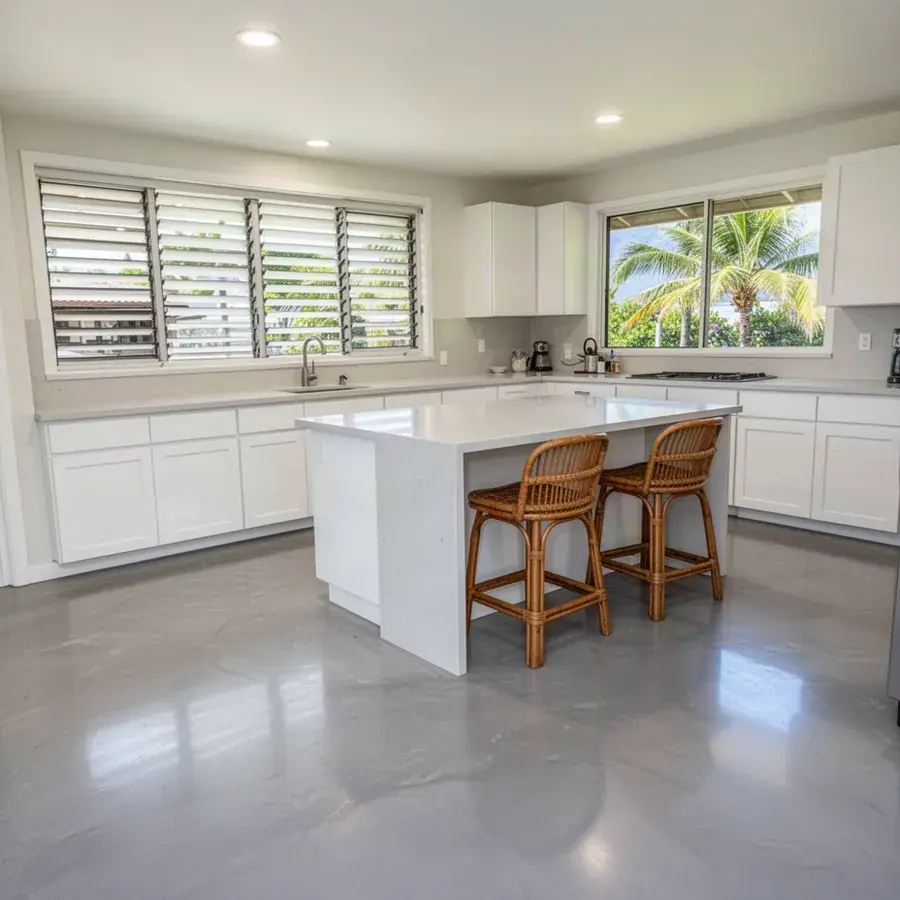
Concrete Finishes We Offer
Four finishes cover most of the concrete floors we install on Maui. The right one depends on the slab you have, the look you want and how much traffic, water and sun the floor will see.
Stained and Dyed Concrete
Acid stain is a solution of metallic salts that reacts with the lime in concrete, producing mottled amber, brown and green tones that no two slabs repeat. Water-based dyes do not react; they soak in as pigment, so they give more colors, including grays and blacks, with a more even result. We often layer the two and always test a small area first, because every slab takes color differently.
Microcement and Microtopping
Microcement is a polymer-modified cement troweled on in two to four thin coats, usually 2 to 3 mm in total. It bonds to sound concrete, and to well-bonded tile with the right primer and mesh, for a seamless hand-finished look that can run from the floor up into a shower. It is the choice when a remodel wants the concrete look without tearing out the old floor.
Self-Leveling Concrete Overlays
A self-leveling topping is a pourable cement that flows out to a flat, smooth wear surface, typically 1/4 inch to about 1 inch thick. Products made for this, such as Mapei Ultratop and Ardex SD-T, are rated as the finished floor, unlike standard underlayments that must be covered. They resurface worn, pitted or patchy slabs and can be integrally colored, stained or lightly polished.
Sealed Natural Concrete
The simplest finish is the slab itself, cleaned, lightly ground and sealed. Penetrating silane or siloxane sealers keep a natural matte look and let vapor escape, acrylic sealers add a satin sheen, and urethane topcoats give the most stain resistance. It is the lowest-cost concrete finish and shows the slab’s character, hairline cracks included.
Concrete Floors in the West Maui Rebuild
Many West Maui homes lost in the August 2023 wildfire are being rebuilt on new slabs, and a slab designed as the finished floor removes a whole flooring layer from the budget. The key is getting involved before the pour, not after the drywall.
We work with your general contractor on the details that decide how a finished slab looks:
- Finish: a hard steel-trowel finish for stains, with no curing compound or sealer that would block color
- Joints: saw-cut control joints laid out to line up with walls, doorways and cabinet runs
- Protection: breathable floor protection board during framing and drywall, because drywall mud, paint drips and rust from steel show through clear finishes
- Timing: the stain and sealer scheduled after the slab has cured and passed a moisture check, usually near the end of the build
Your contractor handles the building permit through Maui County’s Development Services Administration, and we schedule the floor finish around inspections and trades. Our Lahaina and West Maui flooring page covers travel and scheduling for jobs along Honoapiilani Highway.
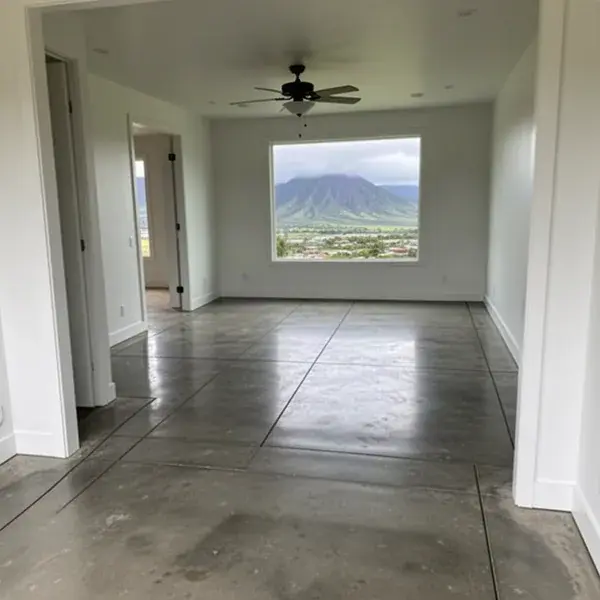
Cracks, Curing and Control Joints
Concrete cracks; the goal is to control where and how much. As a slab cures it shrinks, and control joints, saw cuts made within a day of the pour, give that shrinkage a straight, planned place to go.
Hairline shrinkage cracks
Thin, random cracks under about 1/16 inch are normal and not a structural problem. Stain usually darkens them slightly, and many owners come to like them as part of the look.
Moving cracks
Cracks that open and close with heat or settlement will come back through any thin finish. We fill them with a semi-rigid polyurea or a flexible sealant and tell you up front that they may still show.
Joints in overlays
An overlay must honor the joints under it. We cut or tool joints back through microcement and toppings, because bridging a joint only moves the crack somewhere random.
Joint spacing on a new slab is commonly two to three times the slab thickness in feet, so about 8 to 12 feet for a 4 inch slab. Structural cracks, heaving or a slab that has dropped are repair work first, which our subfloor repair and floor leveling service handles before any finish goes on.
Have a slab you want to show off?
We check it, map the cracks and tell you honestly which concrete finish it can take.
Concrete, Polished Concrete or Epoxy?
All three start with a slab but finish it differently. Decorative concrete changes the color or adds a thin cement surface, polishing grinds the slab itself to a sheen, and epoxy covers it with a resin coating.
| Factor | Decorative concrete | Polished concrete | Epoxy and coatings |
|---|---|---|---|
| How it works | Stain, dye, sealer or a thin cement overlay | Diamond grinding and densifying the slab | Resin coating bonded to a ground slab |
| Look | Mottled color or seamless trowel texture, matte to satin | Cream to exposed stone, satin to high gloss | Solid color, flake, quartz or metallic |
| Hides patches and stains | Overlays yes, stains no | No, the slab’s history shows | Yes, completely |
| Slab moisture tolerance | Good with breathable sealers | Very good, nothing on top to blister | Lowest, needs testing or a moisture primer |
| Best fit | Homes, rebuilds, lanais, retail | Shops, warehouses, open-plan homes | Garages, kitchens, workshops, showrooms |
| Upkeep | Reseal every 1 to 3 years in traffic | Re-burnish and refresh the guard | Recoat the topcoat as it wears |
If the stone-and-sheen look appeals, our polished concrete floor service explains grind levels and gloss. For garages and commercial kitchens that need chemical resistance, see our epoxy flooring and concrete coatings.
How a Concrete Floor Project Runs
Site check and moisture test
1 visit
We look at the slab, map cracks and joints, check for old sealers with a water-drop test and take moisture readings. Slabs that read high get a plan from our slab moisture testing and vapor barrier service before any finish goes on.
Removal and prep
1 to 2 days
Old flooring, glue and paint come off, then diamond grinding opens the surface so stain, overlay or sealer can bond. Tile and black mastic in older homes are tested for asbestos first through our floor removal and disposal service.
Repairs and joints
Half a day to 1 day
Cracks are filled, spalls are patched and joints are cleaned out and marked so they carry through the finish.
Color or overlay
1 to 3 days
Stain and dye go on in passes, with a neutralizing rinse after acid stain. Microcement goes on in thin coats with drying time between, and self-leveling toppings go down in one continuous pour per area.
Sealing
1 to 2 days
Two or more sealer coats go on once the surface is dry. Penetrating sealers take light foot traffic within hours, while film-forming sealers usually need about 24 hours.
Cure and walkthrough
2 to 7 days
Furniture can usually return after 48 to 72 hours, with felt pads under every leg. Full cure takes about a week, and we walk the floor with you and leave sealer and care details.
Most living areas of 500 to 1,000 sq ft take 4 to 8 working days from prep to final sealer, plus cure time. Microcement runs longest because each thin coat must dry before the next one goes on.
FAQ
Concrete Floor FAQ
How long does new concrete need to cure before it's finished?
Plan on at least 28 days before stain or another decorative finish goes on a new slab. By then the concrete is close to its design strength and most early shrinkage has happened.
Drying takes longer than curing, especially for a thick slab in humid weather, so before an overlay or film-forming sealer we test the slab instead of trusting the calendar. Our moisture vapor barrier and slab testing service explains the tests we use.
Will my concrete floor crack?
Almost every slab develops some hairline cracks, and that is normal shrinkage rather than failure. Well-placed control joints, a proper cure and treating existing cracks before an overlay keep cracking small and predictable.
We point out every existing crack before work starts and tell you which ones are likely to show through your finish, so nothing comes as a surprise.
Is a concrete floor hard on your feet?
Yes. Concrete is firm, like tile and stone, and it does not give underfoot.
Most owners add area rugs on a non-slip pad in living spaces and anti-fatigue mats where they stand for long periods, such as the kitchen sink or a shop counter. In return you get a floor that stays cool on hot afternoons and needs very little care.
Get a quote
Price a Concrete Floor Finish
Send a few photos of your slab, the rough square footage and the look you have in mind. We will check the concrete in person and send a written quote with the finish, prep and cure schedule spelled out.
- Mon to Sat 7am to 9pm, Sun 9am to 9pm
- 1710 W Kaahumanu Ave, Wailuku, HI 96793
- Licensed, insured and backed by a 1-year labor warranty