Hardwood Floor Repair on Maui
Maui Prestige Flooring repairs solid and engineered hardwood floors in Maui homes, condos, rentals and shops, from a single split board to a kitchen full of cupped planks. In 16+ years and more than 1,700 flooring jobs, we have pulled up enough damaged wood to know what usually went wrong underneath it.
Wood floor repair on the island is mostly a moisture story, with termites, pets and beach grit close behind. We take readings, find the cause, weave in new boards that match the species and width, and blend the finish so the patch disappears.
Repairs are quoted in writing after we have seen the floor and measured its moisture. All of our repair labor carries a 1-year warranty.
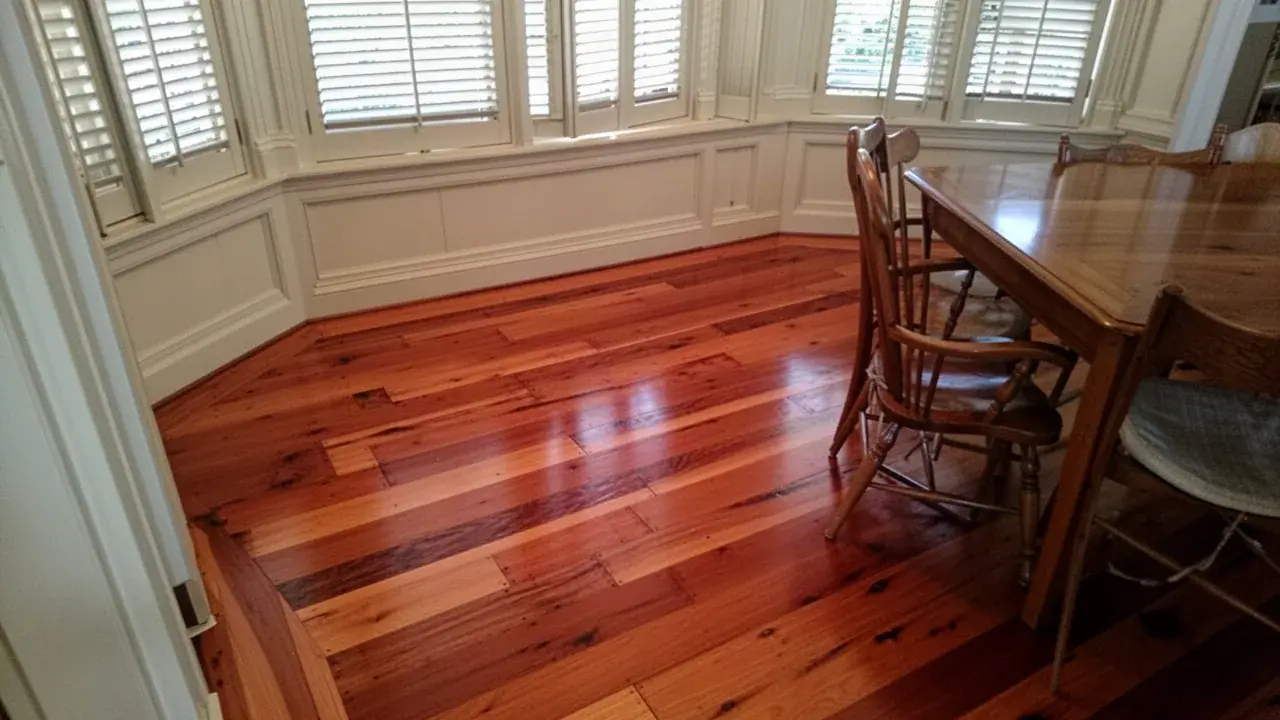
Hardwood Floor Repair Services: Boards, Gaps, Cupping and Scratches
Hardwood floor repair fixes damaged boards and the conditions that damaged them, without replacing the whole floor. We repair solid strip and plank floors, engineered hardwood, and site-finished or factory-finished wood.
Homeowners call us after a leak under the sink, when a home inspection flags soft or stained boards, or when the dog has left marks by the back door. Property managers use us between rental guests, and condo owners call after water comes through from the unit above.
A hardwood repair visit covers:
- Inspection with pin and pinless moisture meters on the wood and the slab or subfloor
- Diagnosis of cupping, crowning, gaps, buckling or squeaks
- Board replacement using matching species, width and thickness
- Securing loose boards and quieting squeaks
- Finish blending, from a spot recoat to a full room refinish
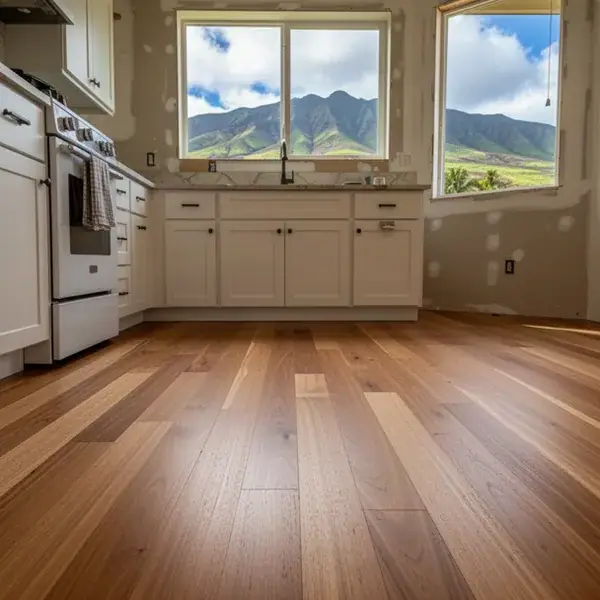
Common Hardwood Problems and How We Fix Them
Most hardwood problems have one of a handful of causes, and the fix depends on getting the cause right. This is how the usual symptoms break down.
| Problem | What you see | Likely cause | Our fix |
|---|---|---|---|
| Cupping | Board edges higher than centers | Moisture from below: slab, crawlspace or leak | Fix and dry the source, wait, then sand flat if needed |
| Crowning | Board centers higher than edges | Floor sanded while cupped, or water on top | Correct the moisture, then replace or resand boards |
| Gaps | Dark lines between boards | Seasonal drying, AC, or wood installed too wet | Leave seasonal gaps; fill or replace boards for permanent ones |
| Buckling | Boards lifting off the subfloor | Flooding or no expansion space at walls | Remove the area, dry, then relay or replace boards |
| Squeaks | Noise and movement underfoot | Loose nails, subfloor flexing on joists | Trim-head screws and plugs, or screws from the crawlspace |
| Termite damage | Blistered finish, hollow boards, tiny pellets | Drywood or Formosan subterranean termites | Treatment first, then board and subfloor replacement |
| Pet stains | Gray or black marks near doors | Urine soaking into the grain | Sand out light stains; replace black-stained boards |
| Deep scratches | Gouges showing light wood | Furniture, dropped items, sand and grit | Fill small ones; replace or spot-sand larger ones |
A few of these, especially gaps, are normal wood movement rather than damage. Maui floors in air-conditioned rooms on the leeward side often show thin winter gaps that close again in humid months, and filling them can cause crowning later.
Replacing Damaged Boards
Damaged boards are cut out and new ones woven in with staggered ends, so the repair follows the floor’s original pattern instead of leaving a straight seam. Done well, it is very hard to find once the finish is blended.
We match the new wood on species, width, thickness and grade. Common Maui floors include red and white oak, Brazilian cherry, acacia and maple, and older homes sometimes have narrow strip floors that need milled replacement boards.
The weave-in, also called a lace-in, goes like this:
- Mark the damaged boards and stagger the cut lines so no two end joints line up.
- Plunge cut down the center of each board with a circular saw set to the board depth, then split it out with a chisel so the neighboring tongues and grooves are not damaged.
- Clean out the old nails and adhesive, and check the subfloor or slab below.
- Remove the bottom lip of the groove on each new board so it drops into place, then glue and pin it.
- Sand flush and finish to match.
On engineered floors we use the same product where possible, glued in rather than nailed. If you still have spare boards from your original install, keep them handy because they match better than anything new.
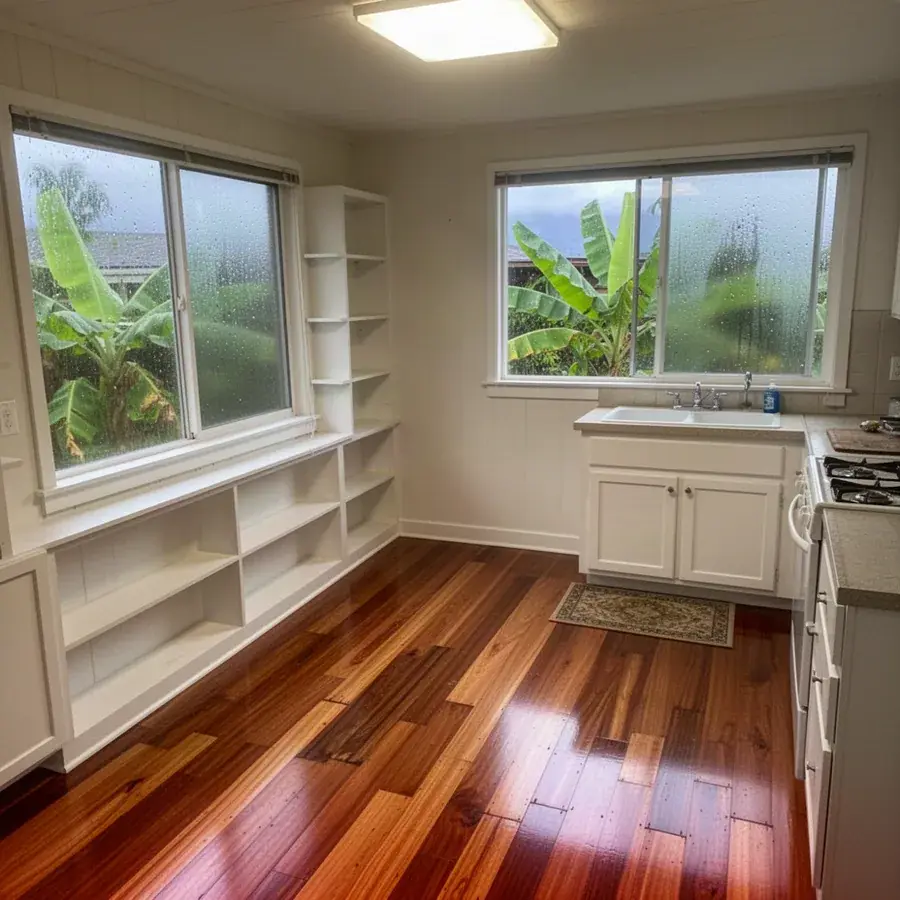
Termite Damage in Wood Floors
Termite-damaged boards can be replaced, but only after a licensed pest control company has treated the colony. Laying new wood over live termites just gives them a fresh meal.
On Maui we see two kinds. Drywood termites live inside the wood and push out tiny, sand-like pellets, while Formosan subterranean termites come up from the soil through slab cracks or crawlspaces and build mud tubes.
Signs in the floor
Finish that blisters or bubbles, boards that sound hollow or crush under a screwdriver, and small piles of pellets along baseboards.
What we do
We probe the area, cut out every affected board plus a margin of sound wood, and inspect the subfloor and joists below.
When it goes deeper
Damaged plywood or joists are repaired through our subfloor repair and floor leveling service before new boards go in.
Prevention, treated lumber and pre-install checks are covered on our hardwood flooring installation page.
Found pellets or soft boards?
Get the termites treated first, then send us photos so we can plan the board replacement.
Fix the Moisture Before the Floor
A hardwood repair fails if the moisture that caused it is still there. Cupping, crowning and buckling nearly always trace back to water from below or a leak nearby, so we find and stop that source before replacing anything.
We compare meter readings from the damaged boards with readings from a dry part of the same floor, and test the slab or subfloor beneath. That tells us whether the water came from a one-time leak or from ongoing ground moisture.
Older slabs without a vapor retarder may need a moisture vapor barrier under the repaired area. Raised homes in Paia and Haiku often need crawlspace ventilation or ground cover fixed first. If the floor was soaked by a flood or a burst line, our water and flood damaged floor repair service handles drying, mold checks and insurance documentation.
Blending Repairs Into the Existing Finish
New boards will not match until they carry the same finish and color as the boards around them. We blend by spot-finishing the repair or by refinishing the whole room, depending on the floor.
Spot refinish
For a small repair, we sand the new boards and their neighbors, stain to match, and feather the finish out to the nearest natural break, such as a board end or doorway. It works best on floors less than a few years old with a satin finish.
Room refinish
When the floor is worn or the color is hard to match, we sand the whole room wall to wall so old and new wood finish to one color. Our hardwood floor refinishing service covers the sanding and finish options.
Sun fade makes matching harder on Maui. Boards near lanai sliders may have bleached or darkened over years, and Brazilian cherry and oak under oil-modified finishes change color most, so a fresh board can look wrong for a few months. We tint the stain to the aged boards, and sometimes recommend leaving new boards to sit in the light before the final coat.
FAQ
Hardwood Repair FAQ
Why is my hardwood floor cupping?
Cupping, where the edges of each board sit higher than the center, means the underside of the wood is wetter than the top. The moisture usually comes from a slab without a vapor retarder, a damp crawlspace or a slow leak from a sink, dishwasher or AC line.
Once the source is fixed and the wood dries, mild cupping often flattens by itself over a few weeks. Sanding a floor flat while it is still cupped leaves it crowned once it dries, so we always wait for stable readings.
Can scratches be fixed without refinishing the whole floor?
Usually, yes. Scratches only in the finish can be blended with a screen and recoat, and small scratches into the wood can be filled with color-matched wax or touch-up markers.
Deep gouges in a few boards are best fixed by replacing or spot-sanding those boards. When scratches cover the whole room, a full hardwood floor sanding and refinishing is the more complete and better-value fix.
How much does hardwood floor repair cost?
Small board replacements are priced as a single job, and the cost depends mostly on the number of boards, whether the species and width are easy to source, and how much finish blending is needed. Spot repairs on a prefinished floor with spare boards on hand are the least expensive.
When the repair includes refinishing the room, that part typically runs $5 to $9 per sq ft for a full sand, or $2 to $3.50 per sq ft for a screen and recoat. Your written quote breaks out each part.
Get a quote
Book a Hardwood Repair Assessment
Send us photos of the damaged boards and the whole room, and tell us if you have any spare flooring. We will take moisture readings on site and send a written repair quote.
- Mon to Sat 7am to 9pm, Sun 9am to 9pm
- 1710 W Kaahumanu Ave, Wailuku, HI 96793
- Licensed, insured and backed by a 1-year labor warranty