Ceramic Tile Installation on Maui
Maui Prestige Flooring sets glazed ceramic floor tile in Maui kitchens, bathrooms, laundry rooms and entries for homeowners, landlords and small businesses. It is the most affordable way to get a true tile floor, and it has been part of our work through 16+ years and 1,700+ flooring jobs.
Ceramic gives you colors, patterns and encaustic-look designs that porcelain often cannot match at the same price. It also chips and cracks more easily when it is set on a bare slab with thin, patchy mortar.
We match the PEI rating to each room, isolate the tile from slab cracks and leave movement joints where the building needs them. The result is a ceramic floor that stays tight and clean in Maui humidity, with a 1-year labor warranty behind it.
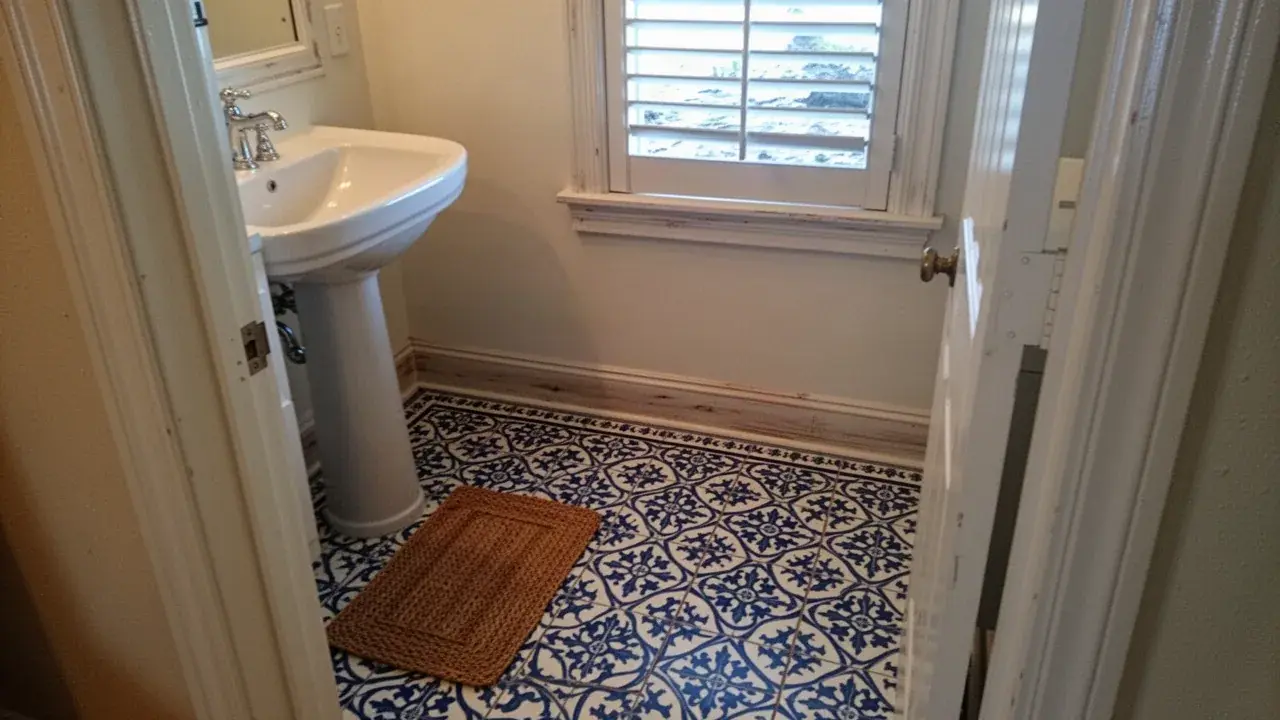
Ceramic Floor Tile Installation for Kitchens, Baths and Entries
Ceramic tile is clay fired in a kiln, with a glazed face that carries the color and pattern. It absorbs more than 0.5 percent water by weight, which is what separates it from porcelain under the ANSI A137.1 tile standard.
That makes ceramic lighter, easier to cut and kinder to a budget than porcelain. It suits indoor rooms such as kitchens, bathrooms, laundry rooms, hallways and entries, and it is the classic tile for patterned floors, backsplashes and bath walls.
It is one of the tile installation services on Maui we offer, and every ceramic tile quote includes:
- Moving furniture and removing the old floor
- Grinding, cleaning and crack mapping the slab
- A crack isolation or uncoupling membrane
- Layout, setting with full mortar coverage and movement joints
- Grout, sealer, transitions and cleanup
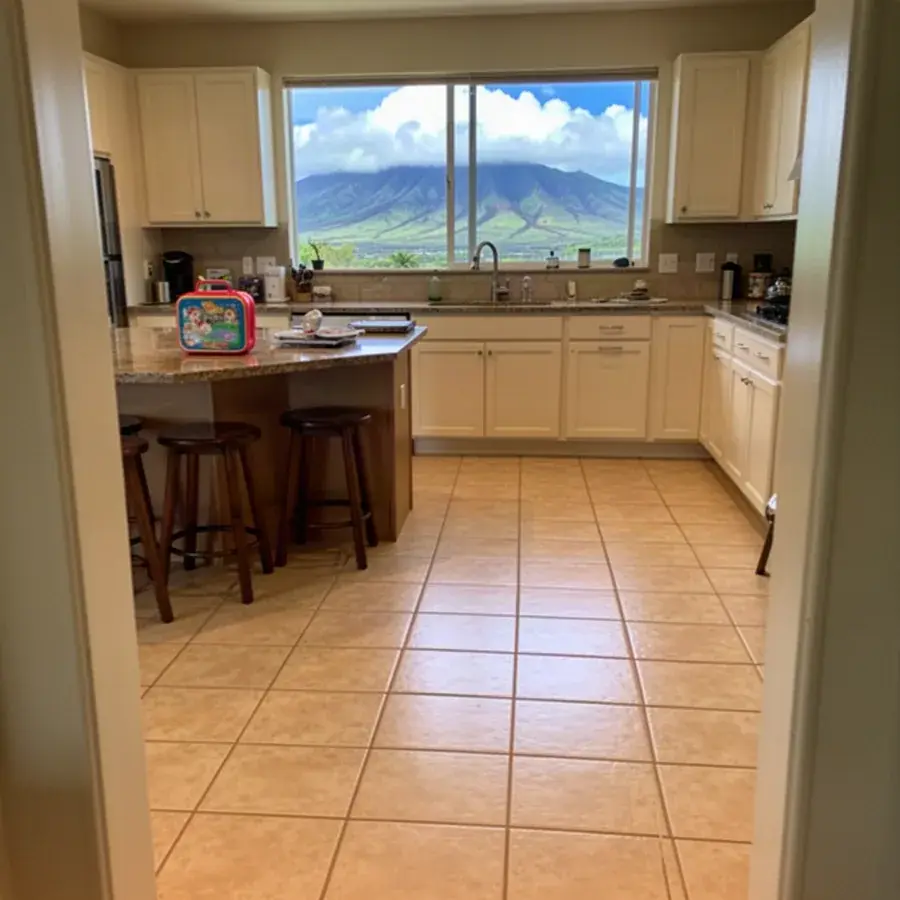
Ceramic vs Porcelain: Know the Difference
Porcelain is denser, harder and nearly waterproof, while ceramic is lighter, cheaper and more decorative. Both make excellent indoor floors when they carry the right rating.
| Factor | Ceramic tile | Porcelain tile |
|---|---|---|
| Water absorption | Above 0.5 percent | 0.5 percent or less |
| Body | Red or white clay under a glaze | Dense, fine clay, often colored through |
| Chips | Show a different color under the glaze | Less visible, especially in through-body tile |
| Outdoor use | Not recommended on Maui lanais | Yes, in exterior-rated finishes |
| Cutting and drilling | Easy with standard tools | Harder, needs diamond blades and bits |
| Typical installed cost on Maui | About $14 to $25 per sq ft | About $16 to $30 per sq ft |
For a bathroom, kitchen or entry on a tight budget, ceramic is usually the smarter buy. For outdoor areas, very large tiles or busy commercial floors, our porcelain tile installation service is the better fit.
Choosing a Ceramic Floor Tile
Three details on the spec sheet tell you whether a ceramic tile belongs on your floor: the PEI class, the DCOF slip rating and the size. Check them before you fall for a pattern.
PEI Rating and Foot Traffic
The PEI rating measures how well a glaze resists abrasion, on a scale of 0 to 5. PEI 0 is wall-only, PEI 1 and 2 suit low-traffic bathrooms and bedrooms, PEI 3 handles every room in a home, and PEI 4 or 5 covers busy entries, rentals and shops.
Beach sand and red dirt grind glazes down quickly on Maui. We suggest PEI 3 as the minimum for any floor and PEI 4 for entries and vacation rentals.
Slip Resistance for Wet Rooms
DCOF is a lab measure of how slippery a tile is when wet. ANSI A326.3 sets 0.42 or higher as the baseline for level indoor floors that get wet, such as kitchens and bathrooms.
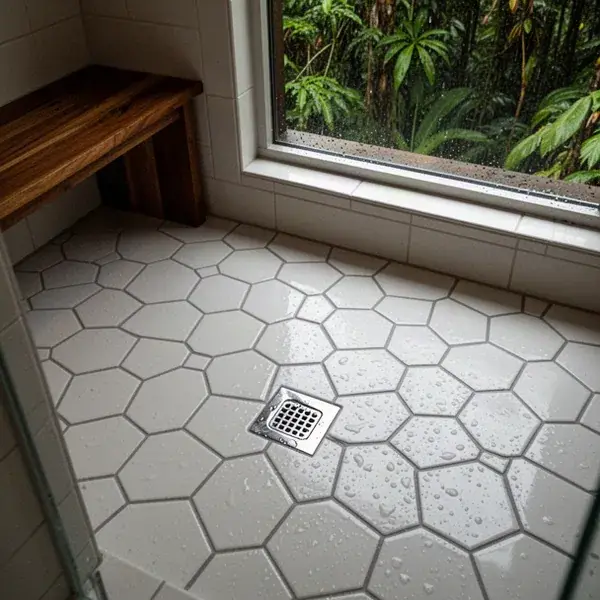
Glossy ceramics often fall short of that. For shower floors, choose small mosaics the maker rates Interior Wet Plus, where extra grout lines add grip.
Tile Size and Layout Patterns
Ceramic floor tile runs from 2 x 2 inch mosaics up to 18 x 18 or 12 x 24 inches. Small tiles follow a sloped floor better, while larger tiles make a room feel bigger.
Straight lay is the most economical pattern. Offset brick and diagonal layouts add character but take more cuts and about 10 to 15 percent extra tile.
Patterned and encaustic-look ceramic is where we spend the most time on layout. We dry lay the pattern first so the motif lands centered in doorways and the cut tiles hide along cabinets and tubs.
Want help choosing a ceramic floor tile?
Bring your samples or look through ours, and we will check the PEI and slip ratings against the room before you order.
Tile Over a Slab: Crack Isolation and Movement Joints
Ceramic cracks on Maui slabs when the concrete moves and the tile cannot move with it. A membrane between slab and tile, plus flexible movement joints in the right places, stops most of that cracking before it starts.
Concrete keeps shrinking for months after it is poured, and slab-on-grade homes settle and flex over the years. Ceramic is the most brittle tile we install, so a hairline slab crack under it can turn into a line of cracked tiles within a year or two.
Sheet uncoupling membranes
Schluter DITRA and Laticrete STRATA_MAT are thin plastic sheets with a cavity pattern, bonded to the slab with thinset. They let slab and tile move independently and spread the stress from small cracks.
DITRA also waterproofs the floor, which makes it a strong choice for bathrooms and laundry rooms.
Liquid crack isolation
Membranes such as Custom Building Products RedGard and Laticrete Hydro Ban are rolled on and cure to a rubbery film. They meet ANSI A118.12 for crack isolation.
They add almost no height, which helps where every 1/8 inch counts at a door, dishwasher or transition.
Movement joints are the other half. The TCNA Handbook’s EJ171 guideline calls for a joint at every wall and change of plane, over joints in the slab, and through the field of the floor every 20 to 25 feet indoors. That spacing tightens to 8 to 12 feet in rooms that take direct sun, such as a living room behind a big lanai slider.
A movement joint is filled with color-matched flexible sealant instead of grout, so it looks like a grout line but can flex. The perimeter gap hides under the baseboard. Skip these joints and a ceramic floor can tent, lifting into a ridge on a hot afternoon.
Before the membrane goes down, slabs with high moisture readings get a moisture vapor barrier under the tile. Dips and humps are fixed through our subfloor repair and floor leveling service.
Grout That Stands Up to Humidity
The best grout for a humid Maui bathroom is epoxy or a premixed single-component grout, because neither needs sealing and both resist the staining and mildew that cling to plain cement grout. Cement grout still works well in dry rooms when it is sealed and kept clean.
Mildew grows less in the grout itself than in the soap film and moisture trapped in porous joints. Windward homes in Paia and Haiku see it most, where bathrooms rarely dry out fully between showers.
| Grout type | Standard | Sealing | Best for | Trade-off |
|---|---|---|---|---|
| Cement grout, sanded or unsanded | ANSI A118.6 | Penetrating sealer, renewed every 1 to 2 years | Dry rooms, tight budgets | Porous, stains and darkens with moisture |
| High-performance cement grout | ANSI A118.7 | Recommended | Kitchens, bathrooms, rentals | More even color, still somewhat porous |
| Premixed urethane or acrylic grout | Maker’s own spec | Not needed | Bathrooms, laundry rooms, humid homes | Slower cure, careful cleanup |
| Epoxy grout | ANSI A118.3 | Not needed | Showers, kitchens, commercial floors | Higher cost, slower to install |
Grouts we work with include Laticrete PERMACOLOR Select and SpectraLOCK PRO, Mapei Kerapoxy CQ and Custom Building Products Fusion Pro. With any grout, a bath fan that runs 20 minutes after each shower does more against mildew than any product.
How We Install Ceramic Tile
Remove the old floor
Half a day to 2 days
We protect cabinets and doorways, take up the old floor and haul it away. Older floors are tested for asbestos through our floor removal and disposal service before anything is broken up.
Grind and clean the slab
Half a day
Old adhesive and paint are ground off, cracks are mapped and the slab is checked with a 10 foot straightedge. Dust is vacuumed so the membrane bonds to clean concrete.
Install the membrane
Half a day to 1 day
Uncoupling sheets or liquid crack isolation go down over the whole room, with extra attention at slab cracks and doorways.
Lay out from the center
A few hours
We snap lines from the center of the room and dry lay a row each way. That keeps wall cuts even and avoids a thin sliver at the doorway.
Set with full coverage
1 to 3 days
Tiles are set in polymer-modified thinset to ANSI A118.4 or A118.15, back-buttered where needed and beaten in. We lift a tile now and then to confirm 80 to 95 percent coverage.
Grout, caulk and seal
1 day, plus cure
Grout goes in once the mortar has set, movement joints get flexible sealant, and cement grout is sealed after it cures. Trim goes on and we walk the floor with you.
A typical 60 sq ft bathroom floor takes 2 to 3 days from tear-out to grout. We leave you a box of spare tiles, and if one ever cracks, our tile floor repair service can swap it with a matching piece.
Planning a heated bathroom floor? A thin electric mat fits under ceramic tile as part of our radiant heated floor installation, and it pairs well with an uncoupling membrane.
FAQ
Ceramic Tile FAQ
Is ceramic tile durable enough for floors?
Yes, as long as it carries a PEI 3 rating or higher and is set over a sound, flat substrate. A well-installed ceramic floor lasts for decades in a home, and a single chipped tile can be cut out and replaced.
The weak spot is the glaze. A PEI 1 or 2 tile meant for walls or light bathroom use will wear through in a busy Maui entry, so we check the rating before you order.
Can ceramic tile go on an outdoor lanai?
Usually not. Ceramic absorbs more water than porcelain, many glazes turn slippery when wet, and most makers do not rate their ceramic for exterior floors.
For an open lanai or pool area we recommend textured tile from our porcelain tile installation service or a natural stone instead. A fully covered lanai that never takes rain can sometimes use ceramic, but only when the manufacturer rates that tile for it.
How long does ceramic tile installation take?
Most bathroom floors take 2 to 3 days, and a kitchen or living area of 300 to 600 sq ft takes about 4 to 7 days. Removing an old mortar bed or doing major leveling adds 1 to 3 days.
You can walk on the floor carefully about 24 hours after grouting. Heavy furniture and appliances can go back after about 72 hours.
Get a quote
Schedule a Ceramic Tile Measure
Tell us which rooms you want tiled and send a photo of the tile you like. We will measure, check the slab and send a written quote for your ceramic tile installation.
- Mon to Sat 7am to 9pm, Sun 9am to 9pm
- 1710 W Kaahumanu Ave, Wailuku, HI 96793
- Licensed, insured and backed by a 1-year labor warranty