Radiant Heated Floor Installation on Maui
Maui Prestige Flooring installs electric radiant floor heating under tile, stone and rated wood in bathrooms, kitchens and living spaces across Maui. With 16+ years and more than 1,700 flooring jobs behind us, the heating and the floor on top of it are planned together by a flooring specialist.
Most people do not expect heated floors in Hawaii, and at the beach you rarely need them. In Kula, Makawao, Olinda and other Upcountry homes, or on a cold porcelain bathroom floor at 6am, they make a real difference.
We lay out the heating mats or cables, test them, embed them and install the finished floor, then coordinate with your licensed electrician for the circuit. You get a written quote and a 1-year labor warranty on our installation.
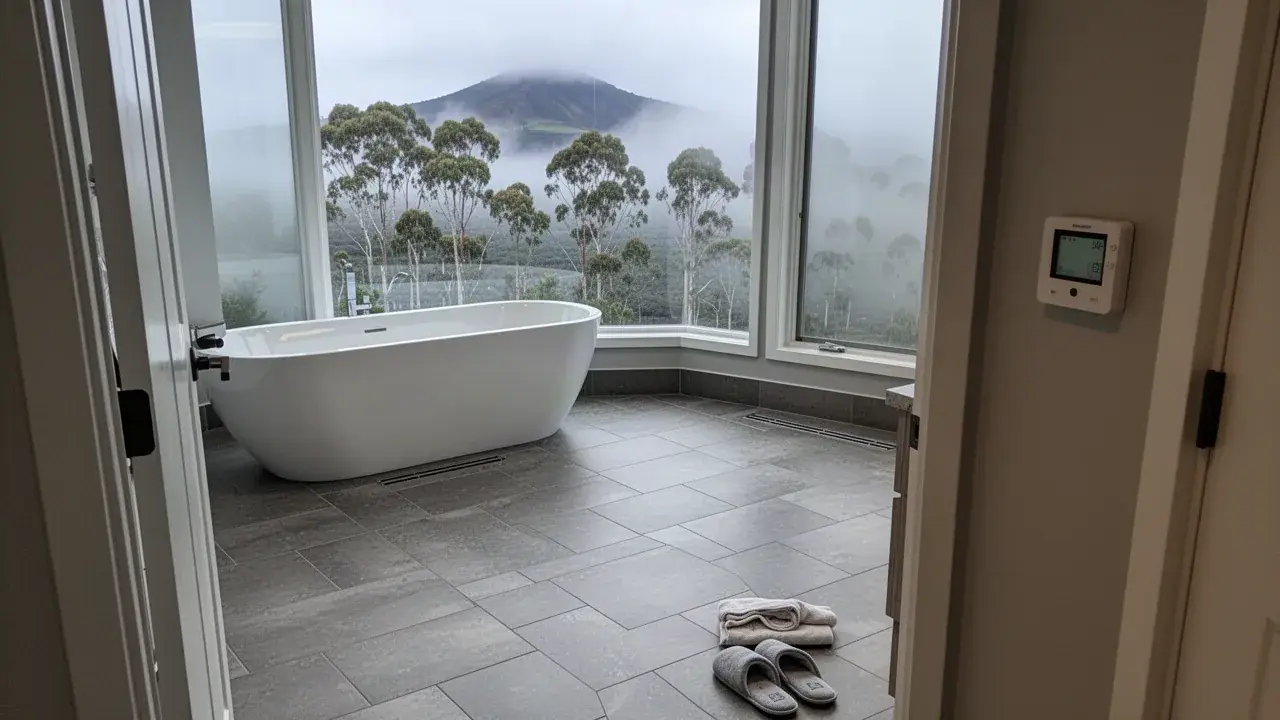
Radiant Floor Heating Installation for Bathrooms and Upcountry Homes
Radiant floor heating warms the floor itself, which then warms you and the room from the ground up, with no fan, ducts or noise. On Maui we install electric systems: thin heating mats or loose cables laid on the subfloor and buried under tile, stone or a rated wood or vinyl floor.
Brands we install include Schluter DITRA-HEAT, Nuheat and WarmlyYours. We pick between them by room shape, the floor covering going on top and how much height the floor can gain.
A heated floor installation from us includes:
- Room layout and a heating plan that avoids toilets, vanities and cabinets
- Subfloor prep and, where needed, an insulation board or uncoupling membrane
- Mat or cable installation with a floor temperature sensor
- Resistance tests before, during and after embedding
- Self-leveler or thinset embedding and the finished floor
- Thermostat box location, ready for your electrician
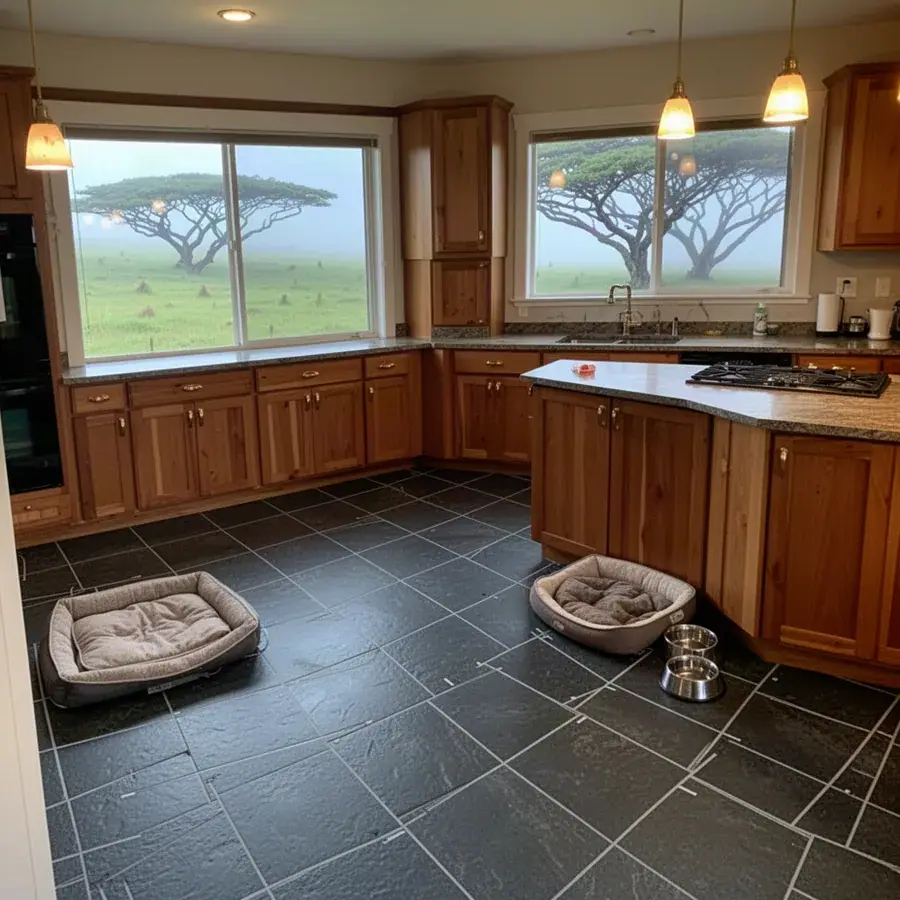
Does a Maui Home Need Heated Floors?
Honestly, most coastal Maui homes do not. In Kihei, Lahaina or Kahului the floors stay comfortable most of the year, and we would rather tell you that than sell a system you never switch on.
Where heated floors do earn their place:
Upcountry homes
At roughly 1,500 to 4,000 feet in Kula, Makawao, Pukalani and Olinda, winter nights turn cool and damp, and tile floors stay cold well into the morning. A heated floor takes off the chill without a space heater humming in the corner.
Tiled bathrooms
Porcelain and stone feel cold to bare feet even at sea level, especially in air-conditioned homes. A small heated zone in front of the vanity and shower is the most popular heated floor we install.
Damp windward homes
In wet North Shore homes in Haiku and Huelo, a warm bathroom floor dries faster after showers and feels less clammy. It does not replace a good exhaust fan, but it helps.
If you live in Kula, Makawao or Olinda, our Upcountry Maui flooring page covers the raised wood-framed homes common there and how we handle their subfloors.
Electric Mats vs Hydronic Systems
Electric systems are the right choice for almost every Maui project, and hydronic systems make sense mainly in large new builds. The difference comes down to install cost, running cost and how easily each fits into an existing home.
| Factor | Electric mats and cables | Hydronic (hot water tubing) |
|---|---|---|
| How it works | Resistance cables heat the floor directly | Water heated by a boiler or heat pump circulates through PEX tubing |
| Install cost | Most projects land between $14 and $25 per sq ft for mat and thermostat, before the finished floor | Much higher up front for the heat source, manifold, pumps and plumbing |
| Running cost | Higher per unit of heat, but small zones only run when needed | Lower per unit of heat across a whole house |
| Retrofit ease | Easy; adds about 1/8 to 3/8 inch under tile | Hard; needs a thicker floor build-up or a new slab |
| Response time | Warm in roughly 30 to 60 minutes | Slow; best left running |
| Best use | Bathrooms, kitchens, single rooms, Upcountry living areas | Whole-house heat in new construction |
Hydronic tubing is plumbing work, installed by a mechanical contractor before the slab or subfloor goes in. For nearly every remodel and most new Maui homes, electric is simpler, cheaper to install and easier to zone room by room.
Cold tile floors in the morning?
We can size a heated zone for your bathroom or Upcountry living room and estimate what it costs to run.
Floor Coverings That Work Over Radiant Heat
Tile and stone are the best floors over radiant heat because they conduct and hold warmth. Other floors work when the manufacturer rates them for radiant heat and you respect their temperature limit.
| Floor covering | Over electric radiant heat | What to know |
|---|---|---|
| Porcelain and ceramic tile | Ideal | Fast heat transfer and no temperature worries |
| Natural stone | Ideal | Thick stone warms slower but holds heat longer |
| Engineered hardwood | Good if rated | Most cap surface temperature at about 80 to 85°F |
| Luxury vinyl plank | Rated products only | Similar surface limit; usually needs self-leveler over the cables |
| Laminate | Some products | Check the warranty first; heat dries the core |
| Solid hardwood | Not recommended | Boards shrink, gap and cup as heat dries them |
| Carpet and cork | Poor | Both insulate and trap the heat |
Our porcelain tile installation and natural stone flooring installation services pair naturally with heated floors. For a warm wood look, our engineered hardwood installation page explains why layered boards handle heat better than solid ones.
Thermostats, Wiring and Energy Use
Every system runs off a dedicated floor-heat thermostat with a sensor buried in the floor, and the final electrical connection is made by a licensed electrician. We install the heating element and sensor and set the thermostat box location; your electrician runs the circuit and makes the connection.
Programmable thermostats
Programmable and Wi-Fi thermostats from Schluter, Nuheat and WarmlyYours warm the floor before you wake and switch off when you leave. Most include the built-in GFCI protection the electrical code calls for on heated bathroom floors.
Circuits and voltage
Small bathrooms often run on 120 volts, while larger areas may need 240 volts or a dedicated circuit. Your electrician sizes the circuit and pulls any electrical permit the job needs.
Energy use
Most electric mats draw about 12 watts per sq ft, so a 40 sq ft zone uses about 480 watts while heating. A thermostat cycles it off once the floor reaches temperature.
Hawaii’s electricity rates are among the highest in the country, so we size heated zones to where your feet actually go, not wall to wall. Skipping the area under a vanity, tub or kitchen island cuts both install and running cost.
How We Install a Heated Floor
Heating cable is hard to repair once it is under tile, so testing is built into every step. We record ohm and insulation readings on the manufacturer’s warranty card at each stage and leave a copy with you.
Old tile or vinyl comes up first through our floor removal and disposal service. A typical heated bathroom floor with porcelain tile takes 3 to 5 working days from removal to grout.
Layout
1 to 2 hours
We map the heated zone, keep cable clear of the toilet wax ring and cabinet bases, and choose a mat size or cable length to match. Mats and cables cannot be cut, so sizing is settled at the measure.
Subfloor prep
Half a day to 1 day
The subfloor is cleaned and flattened. On raised Upcountry wood floors, an insulation board or uncoupling membrane keeps heat from escaping into the crawlspace.
First resistance test
Same day
Each mat or cable is tested out of the box before it touches the floor, so a damaged unit never gets buried.
Install and embed
1 day
Mats are fixed down or cables snapped into a DITRA-HEAT membrane, and the floor sensor goes between runs. After a second test, the heating is embedded in self-leveling underlayment or thinset.
Set the floor and final test
1 to 3 days
Tile, stone or a rated wood or vinyl floor goes on top, and a third test confirms nothing was damaged. Then your electrician connects the thermostat.
Cure before heating
1 to 4 weeks
Thinset and grout must cure before the system runs at full heat, depending on the setting materials. We give you the start date and a gradual warm-up schedule.
FAQ
Radiant Floor Heating FAQ
How much electricity does a heated bathroom floor use?
Most electric floor heating draws about 12 watts per sq ft while it is heating. A 40 sq ft heated area uses about 480 watts, roughly a third of a typical hair dryer.
Run on a programmable thermostat for 2 hours each morning, most bathroom floors use about 1 kWh a day or less, because the thermostat cycles the heat off once the floor is warm. Multiply that by the rate on your Hawaiian Electric bill for a close daily cost.
Can radiant heat go under vinyl plank?
Only if the vinyl plank manufacturer approves it, and many do with conditions. The usual rules are a floor surface limit of about 80 to 85°F, a thermostat with a floor sensor and a layer of self-leveler over the heating cables.
We check the product's installation guide before you order, because an unrated plank over heat usually voids its warranty. Our luxury vinyl plank installation team can point you to rated products.
Can heated floors be added to an existing room?
Yes, but the existing floor has to come up, because the heating goes directly under the new floor. In a bathroom that usually means removing the tile, installing the mat and retiling, which is why heat is easiest to add during a remodel.
The new floor sits about 1/8 to 3/8 inch higher, so we check door clearances and transitions before work starts.
Get a quote
Warm Up Your Floors
Tell us the room, its size and the floor you want on top. We will design the heated area, coordinate with your electrician and send a written quote.
- Mon to Sat 7am to 9pm, Sun 9am to 9pm
- 1710 W Kaahumanu Ave, Wailuku, HI 96793
- Licensed, insured and backed by a 1-year labor warranty